
Direct revenue
Earning money from your audience: from ticket sales to merchandise.
Direct income is an important pillar of cultural entrepreneurship. These are cash flows that come directly from the relationship with your audience or visitors. Think of ticket sales, catering, merchandise or contributions for checkrooms and toilets. This income is not only financially important, but also a sign of relevance: your audience is willing to pay for what you make.
Why direct income is important
Revenue from the public shows that your offering appeals to people and is considered valuable. For subsidy providers and funds, this is often an important signal: it demonstrates cultural entrepreneurship. If people are willing to pay, this increases the credibility and impact of your initiative.
What can the public pay for?
The appropriate sources of income depend on the nature of your project, your audience, and your creativity. Consider:
- Tickets for a show or performance
- Sale of CDs, downloads, or prints
- License income at your workplace or reproductions
- Catering revenue during your event
- Merchandise (such as T-shirts, bags, or posters)
- Lotteries or contests
- Participation in fringe activities
- Contributions for toilets or cloakroom
- VIP packages
- Lessons or workshops within your discipline

Product and price
Consider what you are actually offering. An exhibition, a concert, a workshop: each has its own price perception. What feels "reasonable" or "expensive" varies depending on the discipline. Peripheral matters such as catering revenue also depend heavily on the type of event and your audience. Make sure you know what people are willing to pay for your type of offering.
The cost price matters
Always make a good cost calculation. Deduct any subsidies or sponsorship from your total costs and see how much you need to cover with direct income. Don't forget to include VAT in your pricing. This will help you determine a realistic and well-founded minimum price.
Know your target audience
What people are willing to pay depends on their situation. Students have different spending habits than young parents or people over 50 with a fixed income. Research your target audience: who are they, what can and are they willing to spend, and how does that affect your price? Ask for feedback or observe reactions during your project.
Smart pricing policy: more expensive does not always mean better
Sometimes it is smart to keep the entrance fee low or even free, so that visitors spend more on food, drinks, or merchandise. A higher turnout can also increase your visibility and your income. Experiment with combinations of price and value and keep an eye on the big picture.
Subsequent valuation
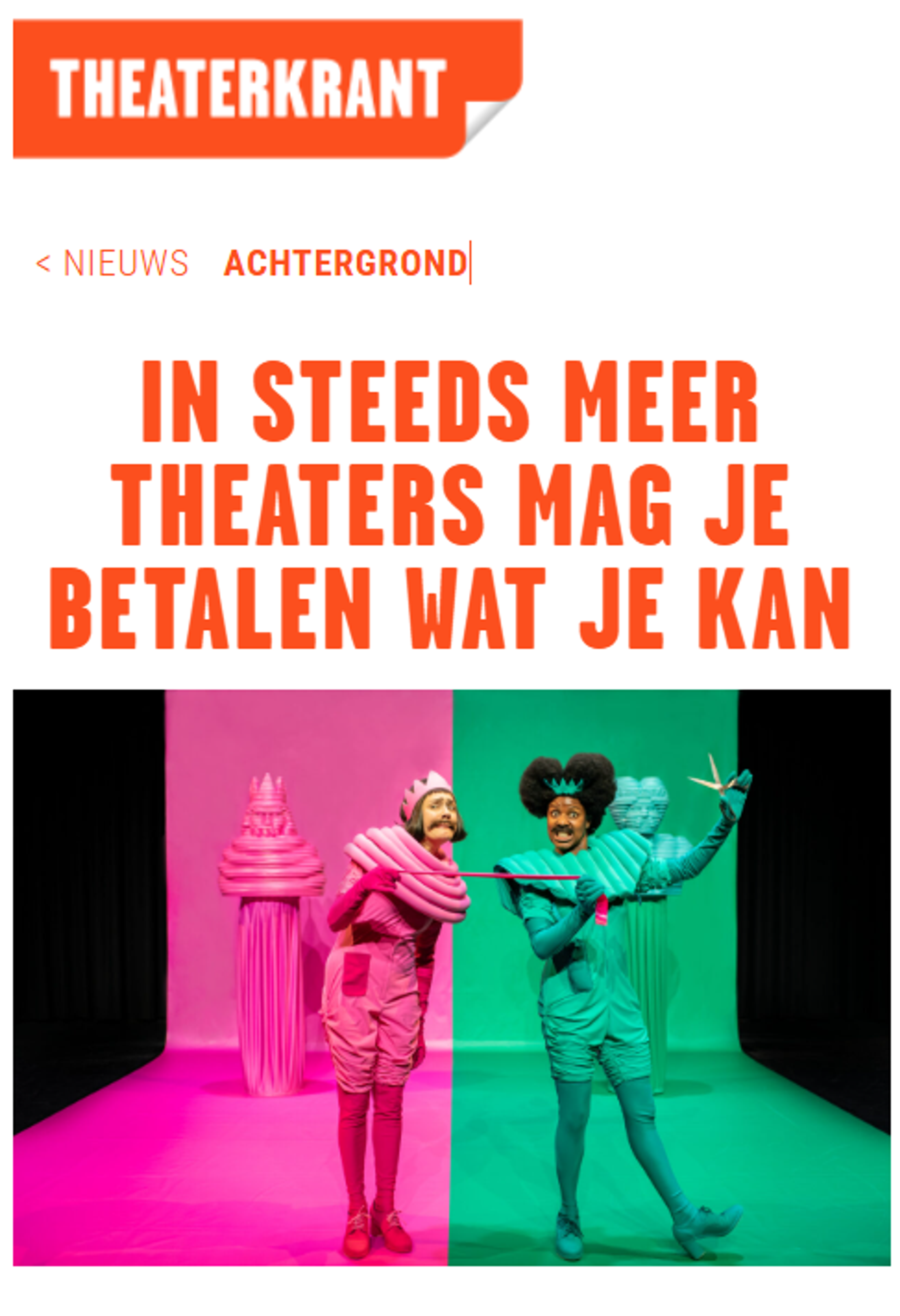
A special form of direct income is retrospective valuation: you let the audience decide for themselves what they want to pay after the event. This can work surprisingly well, especially if you deliver quality and respond to the moment. Think, for example, of a theater group that organizes a series of try-outs in a living room setting. Visitors can contribute what they think it's worth in cash or digitally afterwards. The disadvantage is that you can't accurately estimate your revenue in advance, which makes it difficult to budget.
Seven revenue models for direct income
How can you continue to reach enough audiences and generate income alongside subsidies and grants? In this article, Cultuur+Ondernemen discusses Cultuur+Ondernemen revenue models with a focus on new sources of income:
- Individual sales – tickets, products, or services
- Strip card – multiple visits or sessions in one purchase
- Subscription – fixed income through monthly payments
- Community or club – members receive extras or exclusive content
- Package or bundle – combinations of offers (e.g., ticket + drink)
- Commission or revenue sharing – collaborate and share the benefits
- Donations or pay-what-you-want – voluntary contributions
💡 Tip: Combine models and test what works. There is no single revenue model that always works best: flexibility is your strength.
Importance of entrepreneurship
Optimizing direct revenue also requires an entrepreneurial mindset. Cherish your existing audience, as they are often your most loyal ambassadors. Experiment with formats and prices, and ensure that your order pages are attractive and user-friendly. Actively test new ideas with your audience and increase your understanding of what they find important: are they primarily looking for experience, value, or depth? This knowledge will help you to manage revenue and engagement more effectively. The best revenue strategy? One that resonates with both you and your audience. This is how you build a sustainable practice and a resilient cultural sector.