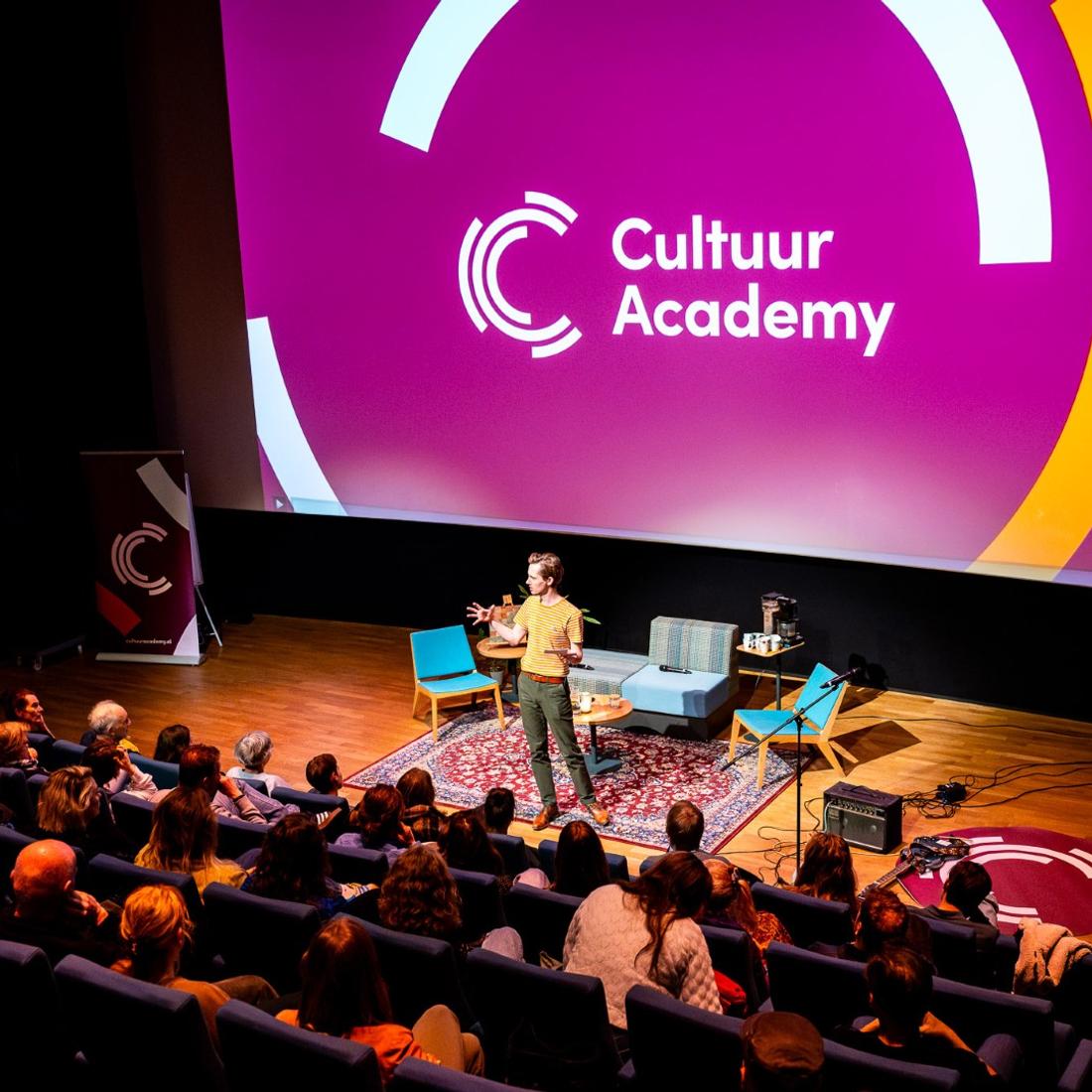
On Thursday, March 20, 2025, the Focus cinema in Arnhem was packed for the fifth edition of Over de Grens, Cultuur Academy's biannual talk show. This edition was entirely devoted to the climate crisis and the role the arts and culture sector plays - or can play - in it. Host Jelko led the audience in his own energetic way through an afternoon full of insights, stories and concrete tools.
Between top-down vision and bottom-up action
The first guests, Eva Middelhoff (director of Stadsschouwburg and De Vereeniging) and Fanne Boland (policy dramaturg at Theater Oostpool), gave an insight into how large cultural institutions are increasingly weaving sustainability into policy and practice. Eva talked about the sustainable renovation of the theater in which a careful balance is being sought between greening and preserving the monumental value. She also mentioned how the switch to vegetarian meals for staff initially met with resistance. By now, veg is the norm, meat is possible.
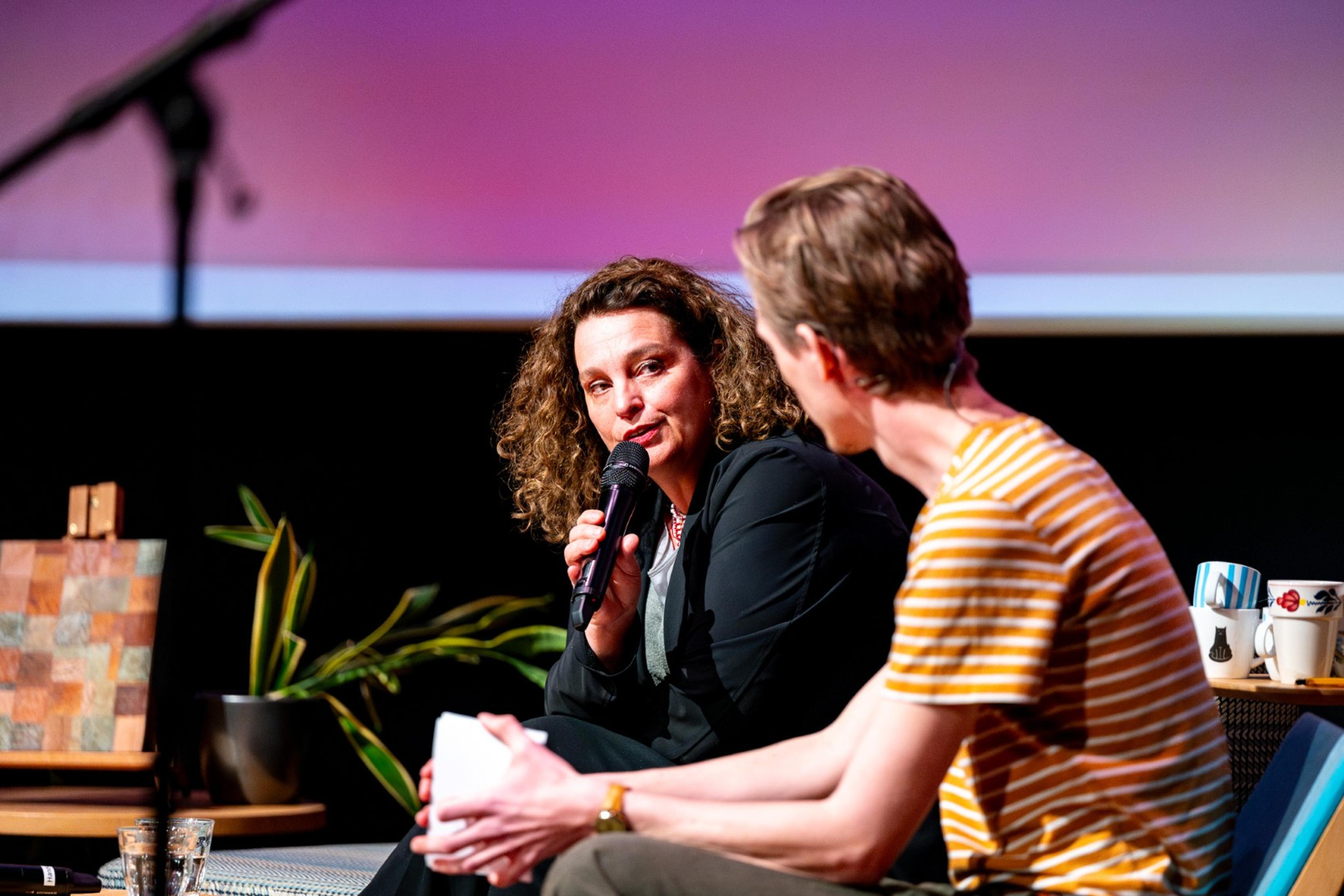
Fanne emphasized that sustainability should not only be imposed from the top down, but also supported by employees. "A clear vision from above is necessary," she said, "but the implementation must arise bottom-up." She added that mobility within the sector - from touring companies to audiences - is one of the biggest challenges. The heading "sustainability" was included in Oostpool's annual report for the first time. That she received feedback on this from colleagues - 'shouldn't we do more with this?' - filled her with hope: "It starts with such small steps."
👉 Tip: Get support from organizations like Daan Duurzaam —they can help with measuring, analyzing, and advising. Together, you’ll get further!
Drinking coffee with...
In the “Coffee Maker” segment, creators and initiators gathered to share their work and mission in an informal setting. Daan Walder spoke about Solemn Venenum, an interactive digital installation about drug waste. As a party organizer in Nijmegen, he sees how drug use has become normalized. “I want to raise people’s awareness so they can make more informed choices.”
👉 Tip: Be sure to check out Queer Utopia at De Vasim—a series of events about queer nightlife and alternative futures.
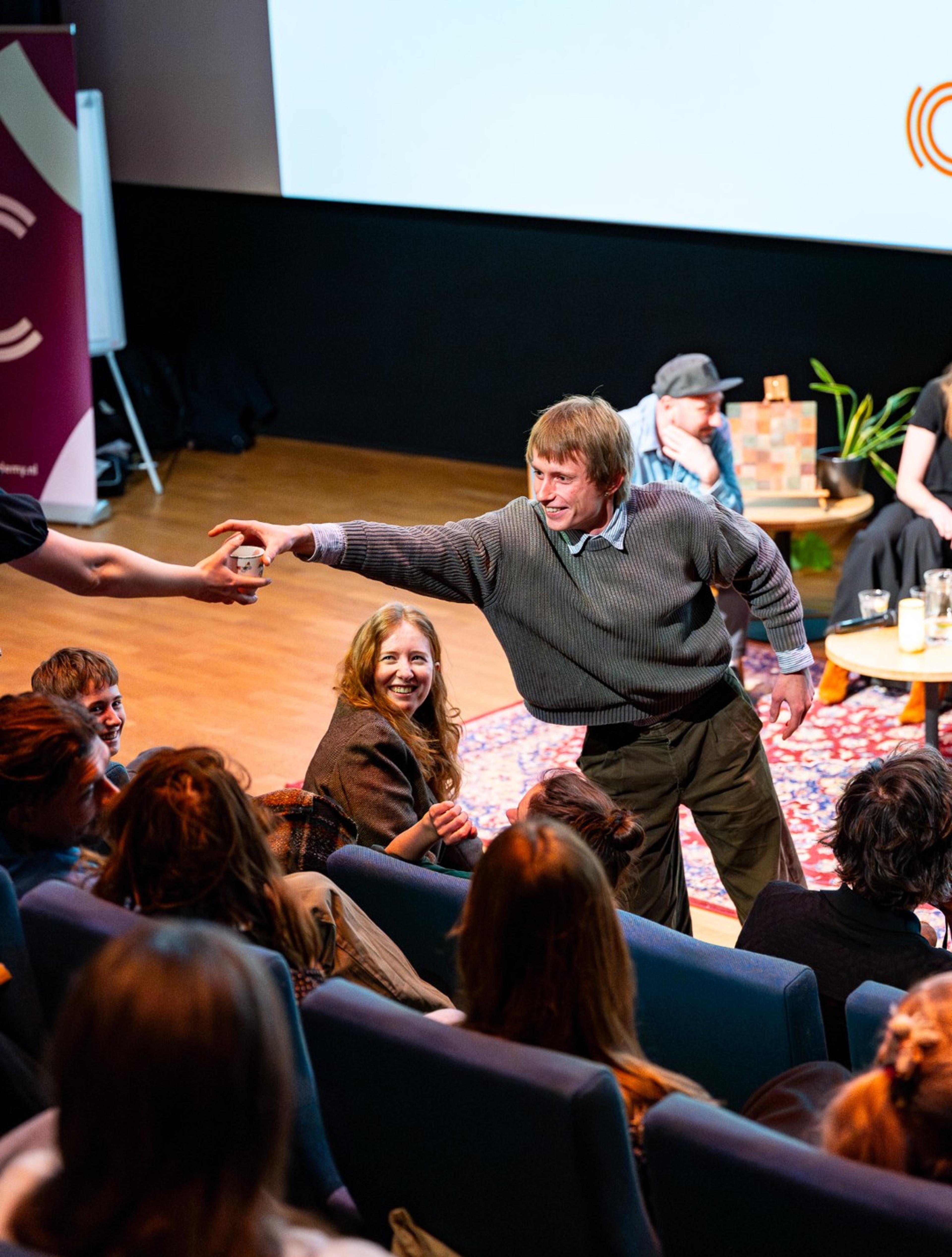
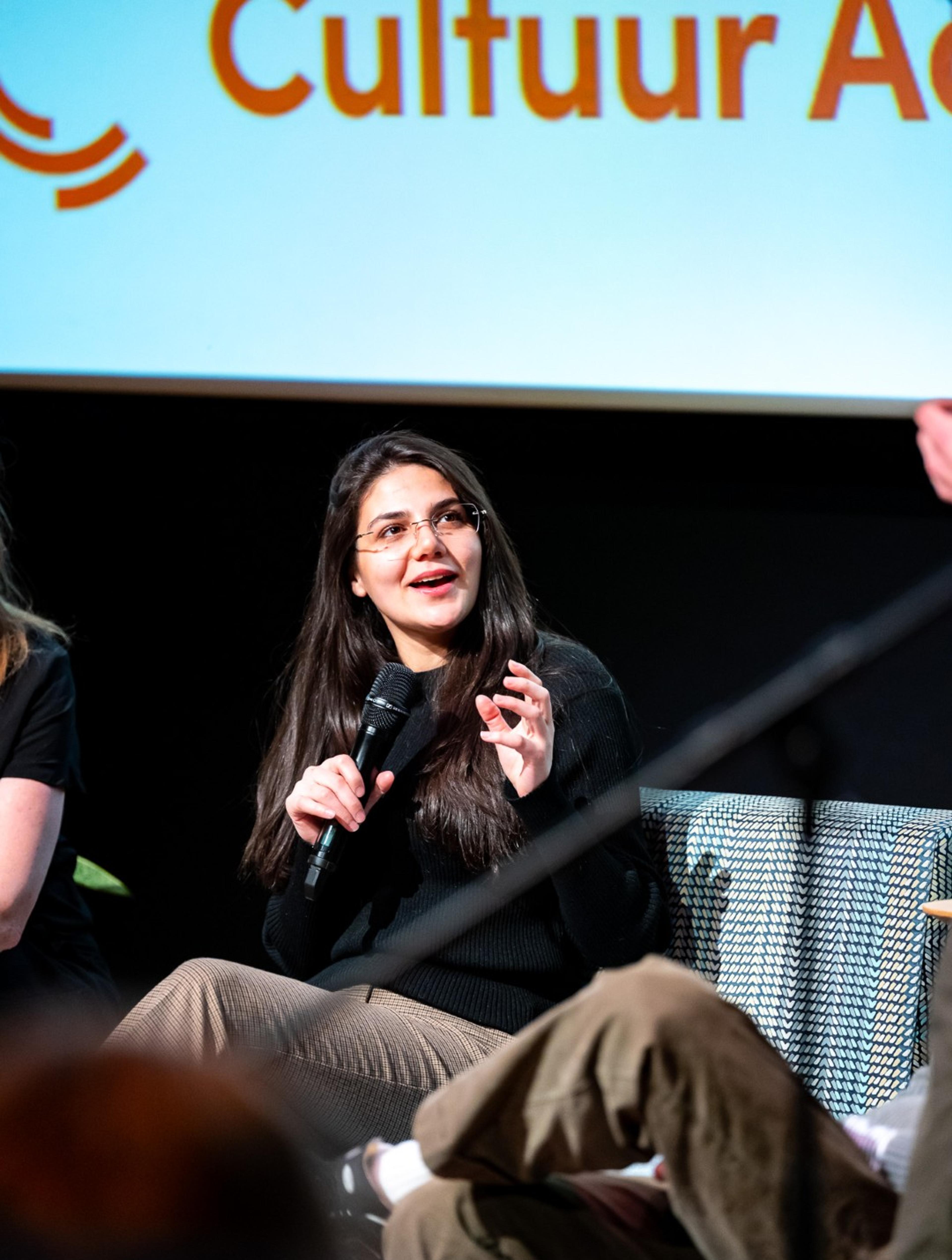
Deborah Heijne and John Kraft, founders of Studio MONK in Nijmegen, spoke about their new space for art and community. MONK focuses on artists who do not (yet) have roots in the Netherlands. They brought along two artists: Sanaa Haj Kaddour is working on an art wall inspired by the seasons around Berg en Dal. Husam Zakaraya discussed his film *Remslaap*, about the human condition in the Middle East, which was selected for the Netherlands Film Festival, among others.
Art as a climate compass
In the second part of the program, various artists took the stage. Their work illustrates, in an impressive and sometimes confrontational way, how the climate crisis affects our daily lives. Photographer Milan Schellingerhout creates photographic art, including *Leven met Vitesse* and *Slippery Slope*. His work features comparative images, such as the impact of ski resorts on the landscape. “I’m always thinking about my relationship to my work and try to capture what I see,” he says. Always through the lens of the human gaze.
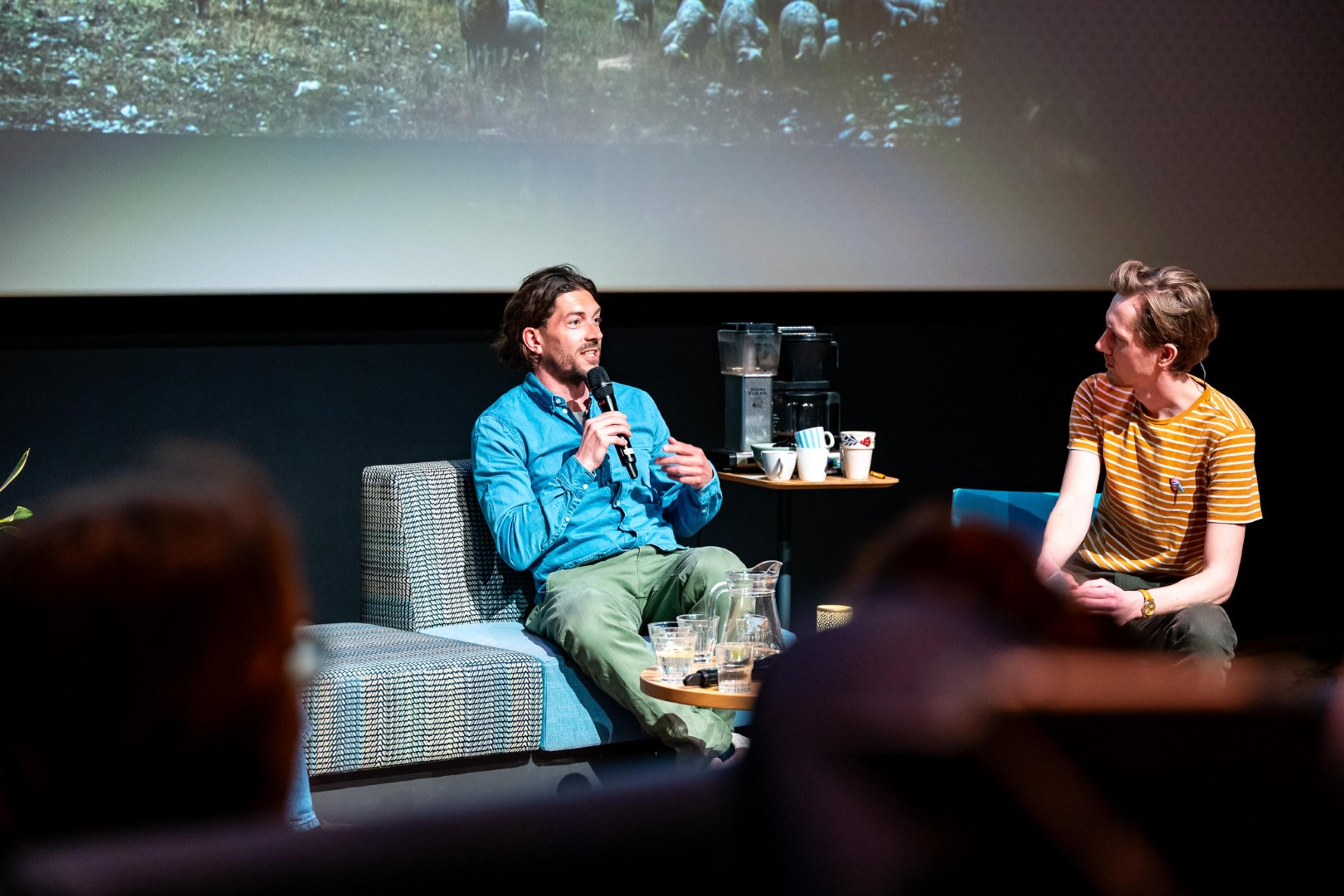
Visual artist Milah van Zuilen works with natural materials - leaves, wood, earth - and creates collages that expose the human-centric nature of the Dutch landscape. She explores how human management and landscaping are visible even in seemingly wild nature. "The climate crisis plays a role, of course," she says, "and brings tension to the work process. But I also look for peace and softness in those hard lines."
Here's how to make an impact
Sebastiaan Groffen, sustainability coordinator at Doornroosje, gave concrete tools for measuring impact within cultural organizations. From energy, catering and mobility to use of materials and personnel: how do you actively involve people on the work floor in sustainability? Meanwhile Jelko made a live drawn summary that represented the conversation.
👉 Tip: Missed something? Don't worry—you can find everything in our knowledge base.
Pass 'm through!
As with every edition, "the baton" was passed on to a new organization. This time, Extrapool - founded in 1991 as a studio space, which has since grown into a vibrant venue for music, printmaking and interdisciplinary programs - passed the baton to Ruimtekoers. "Artists are often deployed in a neighborhood to connect," Joyce Guley and Jan Dirk de Wilde of Extrapool tell us. "But Ruimtekoers does that in the right, stimulating way. I want to know more about that."
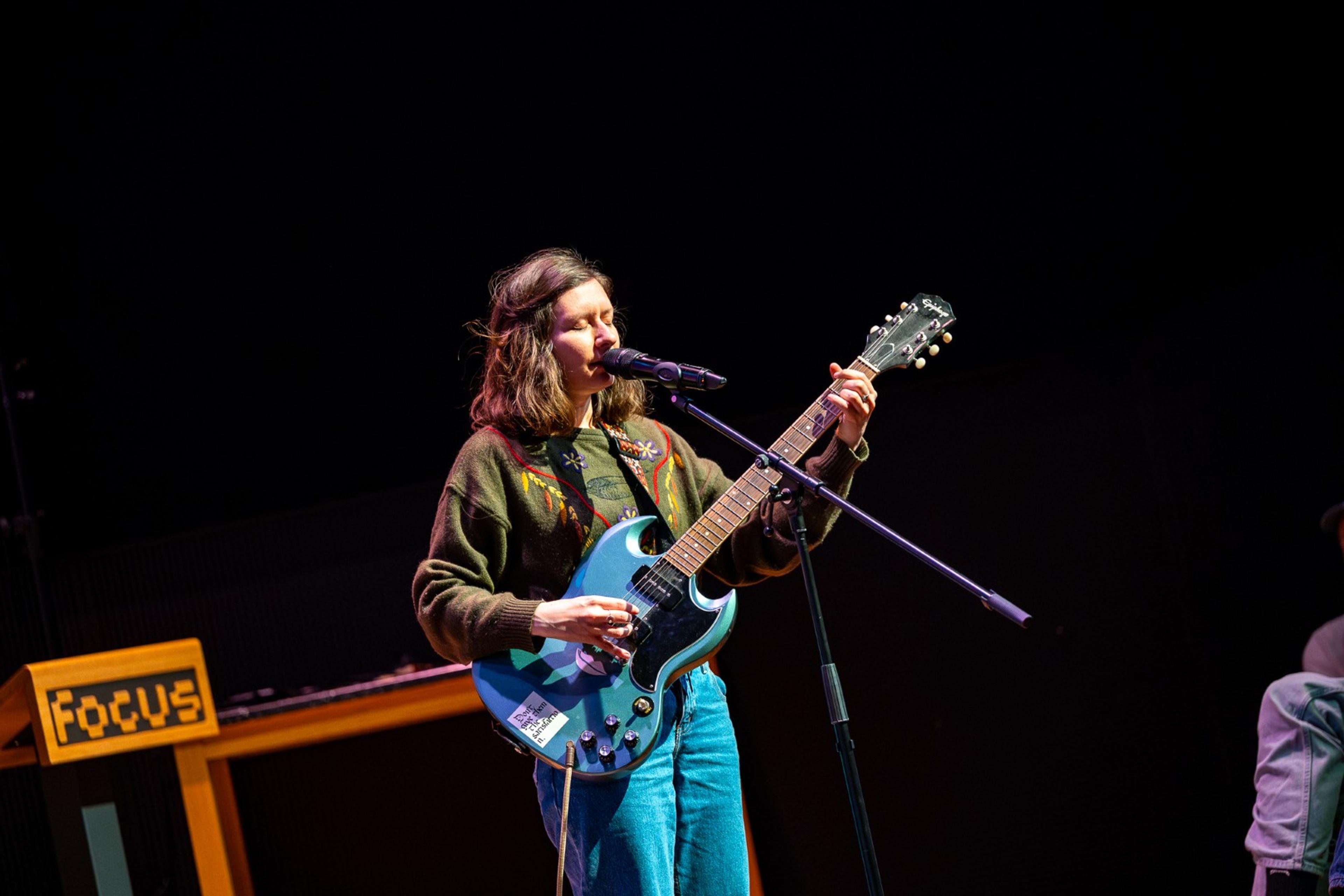
The afternoon was closed musically by Marina Tadic, a singer and HKU student who has been associated with Extrapool for many years. Aptly described by Joyce Guley as, "persistent, incisive and elusive."
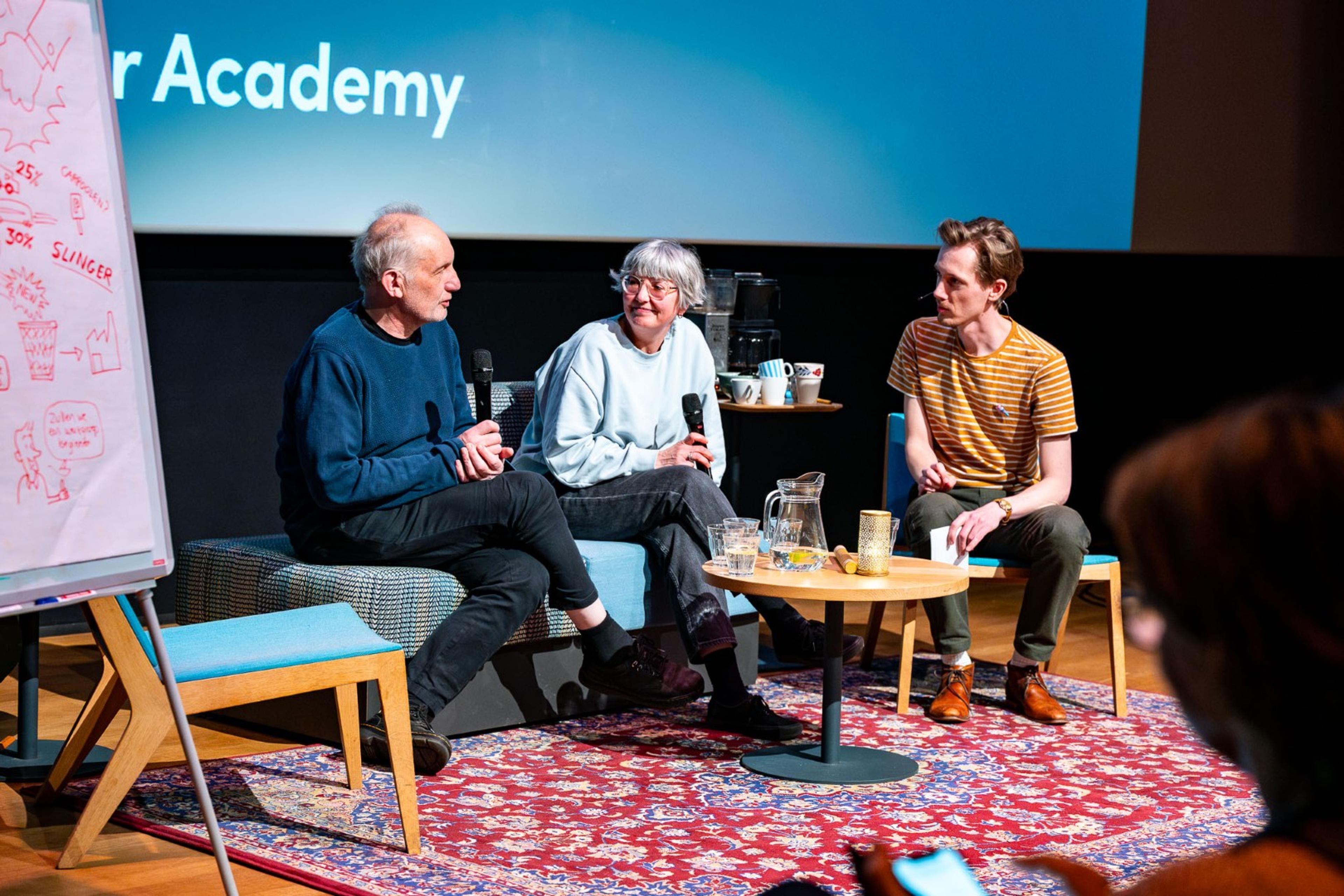
The hall program ran slightly late, but that didn't bother anyone. A well-deserved drink and snack awaited in the foyer. Visitors tested out Daan Walder's installation, chatted and exchanged ideas. An afternoon full of ideas, experiences and inspiration - which hopefully spurred action. Because the question lingers: what can we do for a greener sector?
Want to learn more? Check out our knowledge base for practical tips, information, and regulations and laws related to sustainability in the cultural sector.
Photography: Jesse Wensing