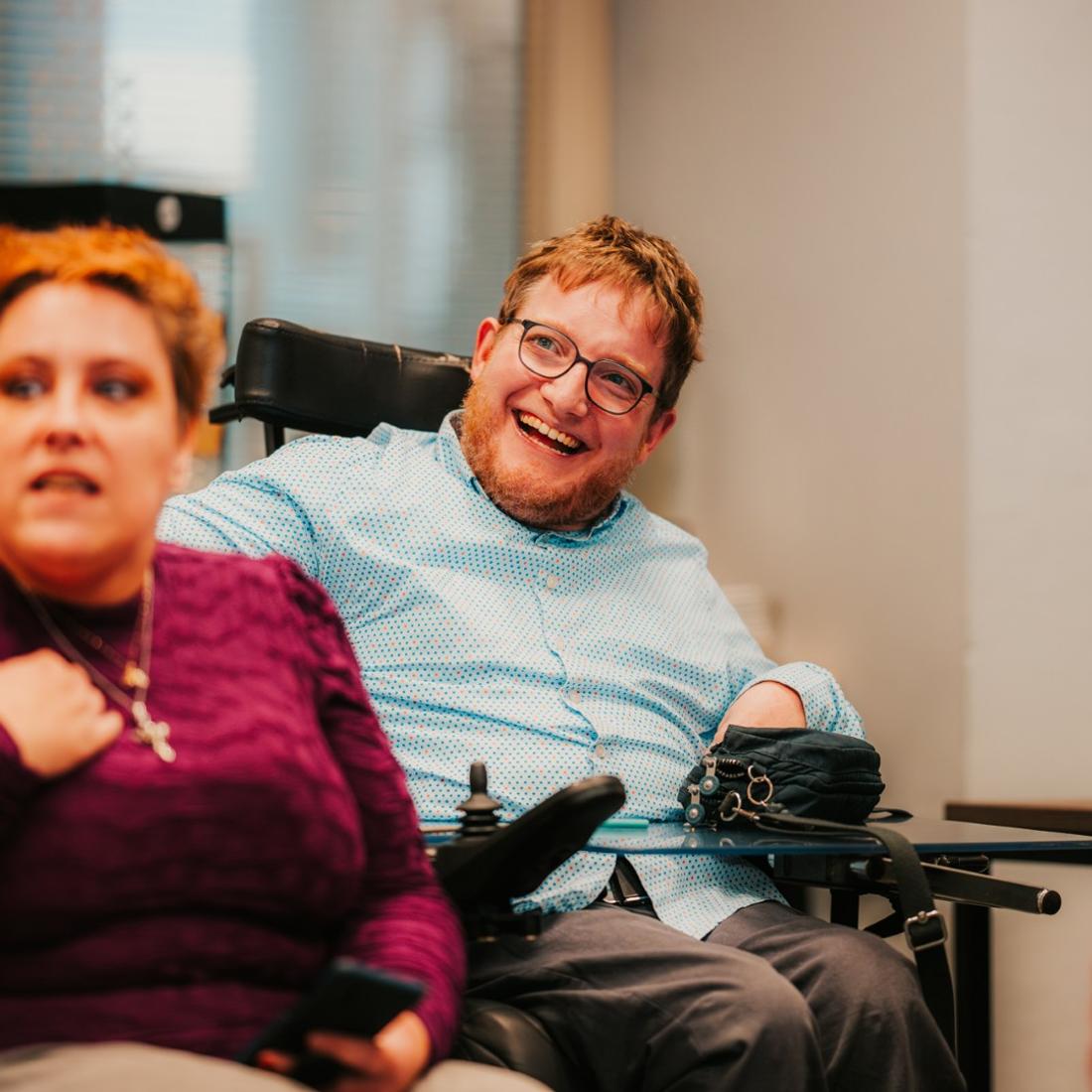
Accessibility at your event: a practical guide
Accessibility is not a trend or a temporary obligation, but an ongoing process. In Arnhem, the issue is becoming increasingly concrete, partly due to stricter permit conditions imposed by the City of Arnhem. At the same time, many organizers are already under pressure, which sometimes makes accessibility feel like an “add-on.” Yet it is essential to view it differently. Without attention to accessibility, you exclude a group of people. The challenge is to make accessibility manageable, step by step.
Accessibility starts with awareness
A common pitfall is viewing accessibility as something you just tack on at the end. In practice, that doesn’t work. Visitors with disabilities can tell right away whether they’ve truly been included or not. It starts with empathy: what does attending an event mean for someone with a disability? From preparation to departure, it’s precisely throughout that entire journey that small details make all the difference.
💡 A real-life example: A family with a child with a disability was denied entry to an event because they had brought their own food. For them, this was necessary. The rules were strict, but there was no room for flexibility. As a result, they left and shared their experience with others. Such experiences spread quickly and have a direct impact on your reach.
What can you do today to make your event more accessible? Below are a few first steps you can take.
1. Understand your target audience
Accessibility is about much more than just wheelchair accessibility. It also concerns people who are blind or visually impaired, deaf or hard of hearing, sensitive to sensory stimuli, or who have an invisible disability, for example.
What these target groups have in common is that they prepare thoroughly. They want to know exactly what to expect in advance. For example:
- Can they make it there?
- Is there an accessible restroom?
- Are there any parking spaces nearby?
- Is there a Dutch Sign Language interpreter or audio description available?
- And perhaps most importantly: do they feel welcome?
So make sure your information is complete and honest—even if something isn’t there. It’s precisely that clarity that helps people make a decision.
2. Make accessibility a priority in your communications
An accessible website or clear information page is one of the most important first steps. This is where you can find all the practical information related to accessibility, such as how to get there, available facilities, and any support services.
It is also important to tailor your communication to your target audience. Not everyone processes information in the same way. For people with hearing impairments, for example, Dutch is not always their first language. This calls for clear, simple communication and visual aids whenever possible.
💡 Tip: Also think about how you design your invitation. A video featuring a sign language interpreter can make a big difference and doesn’t have to be complicated or expensive.
3. Reach your target audience through the right networks
Many organizers ask themselves: where can I find these target groups? The answer is often simpler than you might think. Most people are connected to networks, advocacy groups, or communities. In Arnhem, for example, there are various organizations and networks that can help you reach your target group. These include local initiatives, schools, healthcare institutions, and advocacy groups. They often have newsletters and extensive networks where your event can be shared.
Specific platforms and newsletters are also valuable. For example, you can share activities for blind or visually impaired visitors through specialized channels, and there are event calendars and communities for deaf and hard-of-hearing visitors. By actively utilizing these resources, you can significantly expand your reach.
💡 Tip: Start communicating early on. If you don’t start thinking about accessibility until the last week, it’s often too late.
4. Work with your target audience
One of the biggest mistakes you can make is assuming that, as a person without a disability, you know what’s needed. Accessibility works best when you involve the target audience directly. So talk to people with disabilities or the organizations that represent them. They’re often happy to contribute their ideas and offer valuable insights. Plus, they have their own networks, which can help spread the word about your event.
Within this target group, experience is everything. A negative experience can cause people to stop coming back and to share that experience with their network. But the opposite is just as true. If the experience is positive, your audience will grow naturally. (Figurative) word-of-mouth advertising is highly effective within these target groups and spreads like wildfire.
Practical steps and quick wins
You don’t have to do everything perfectly right away. Start small and build from there. Here are a few steps that cost relatively little but have a big impact:
- Make sure your website has a clear accessibility page
- Inform and train your staff and volunteers
- Be open to customization and exceptions
- See how other organizations handle this and learn from them
- When possible, include offers in your programming
💡 Tip: Try to focus. For example, choose one target audience and make sure you do a good job for them. If you try to do everything at once, you run the risk of not doing anything particularly well.
Grants and funds for accessible events
Although accessibility is sometimes viewed as a cost, there are certainly opportunities to obtain support. Consider funds that focus on inclusion and accessibility, such as:
- VSB Fund
- KSBS Foundation
- The Hermus Fund
- Accessibility Fund (City of Arnhem). Please note: this program is intended for permanent locations and not for temporary events.
In practice, accessibility doesn’t have to be a major investment. Renting an accessible restroom or sharing one with other organizers is often possible for a modest additional cost. By working together smartly, you can keep costs low while still meeting the requirements.
What's next?
Accessibility requires attention, but above all, a different perspective. It shouldn’t be treated as an extra task, but rather as an integral part of how you organize your event. In the Accessibility section of this knowledge base, you’ll find practical tips, step-by-step guides, and inspiration to help you get started, organized into five themes.
Are you ready to take the next step but not sure where to start? Or would you like to share experiences with other organizers? Contact us at manon.cornelissen@arnhem.nl to brainstorm ideas or explore further possibilities together.