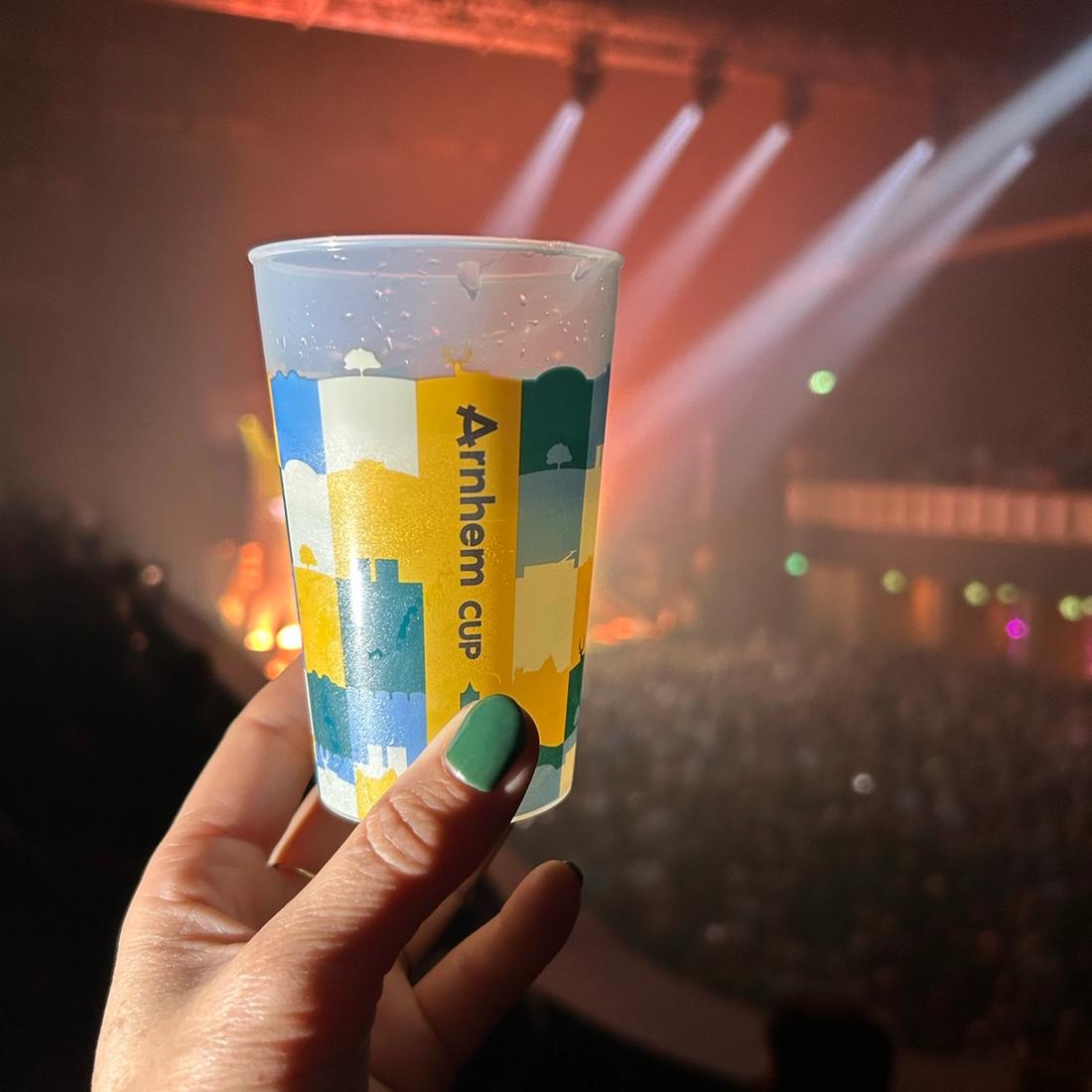
Smart Deposit System at Events: The Ernemse Hertcups
Sustainability is no longer an afterthought in the cultural sector. From energy consumption to mobility and from catering to waste streams: venues and events are seeking practical solutions that make a real difference. In Arnhem, concrete experiments are underway through a pilot program featuring reusable cups: the Ernemse Hertcups. One of the first venues where the system was tested is Musis & Stadstheater Arnhem. In this article, Dani Levy (founder of APD CUP) and Matthijs de Jong (hospitality coordinator at Musis) share their experiences. What prompted the initiative? How does the system work in practice? And what are the benefits for both visitors and the organization?
From Frustration to Innovation
For Dani, it all started with a familiar problem. “I’m an event organizer myself, and I struggle with the plastic waste generated at events,” he explains. Through a sponsor, he was introduced to TOMRA’s technology: a machine capable of accepting more than just returnable bottles. That gave him an idea. “Why don’t we develop a cup that replaces plastic cups, and a machine that can recognize that cup and refund the deposit, all fully automated?”
What began as an experiment in Apeldoorn quickly grew into a serious concept. During a major event around New Year’s Eve 24/25, with 7,000 visitors, the system was tested for speed, ease of use, and willingness to return items. “We really only got positive feedback,” says Dani. “From there, we continued to develop it.”
What makes the system different?
According to Dani, the difference lies not only in the reusable cup, but rather in the motivation. “Even in existing deposit systems, disposable plastic is often still used. The last cup isn’t returned because there’s no benefit to it anymore.” Especially at outdoor events, that cup still ends up on the ground. “In our system, there is a benefit,” he explains. “Even if it’s not your cup, you still have an incentive to return cups and clean up. That ensures clean event venues.” All cups are professionally washed afterward and reused. “The entire chain operates this way, virtually waste-free.”
The First Major Test in Arnhem
At Musis, there was another, equally urgent issue. “We host various performances, but also standing-room-only events like pop concerts and dance parties,” Matthijs explains. “We used to use plastic cups. Afterward, the venue was a huge mess. It always took us a long time to clean up. We had to find a different solution.”
With a maximum capacity of 1,800 visitors, trash is no small problem. Musis had already started using a token system to raise awareness. The meeting with Dani came at just the right time. “I needed a little convincing,” Matthijs admits honestly. “The next concert was Machine Head, completely sold out. We took the plunge and decided: we’re going to test it with a full house.” With support from Dani and TOMRA, the system was implemented.
How does it work?
The principle is simple. At Musis, visitors pay a €2 deposit for the reusable cup with their first drink. When ordering another drink, you return your cup and receive a clean one in exchange. If you lose your cup, you pay the deposit again. At the end of the evening, you return the cup to a smart return machine, known as a “smartbin.” You’ll receive €1 back via a QR code. The other euro is used to wash, store, and transport the cups. “We invest in the machines and the cups. Visitors get a portion of that back. That’s how we cover the costs,” says Matthijs.
For Musis, the system was just as new as it was for the audience. That’s why visitors were informed in advance via a newsletter, and clear instructions were posted on-site at the bars and in the foyer. What stood out? “People got the hang of it quickly. It was new, but we had very few questions.” According to Matthijs, there’s also been positive feedback from the audience. Visitors appreciate that Musis is actively working on a sustainable solution for plastic use. “You can tell that people think it’s important for us to take steps in this area. That also helps with acceptance.”
Behind-the-Scenes Effect
For the bar staff, things changed less than expected. Matthijs: “The bar is getting cups returned more actively, but we just store them in boxes. That works very efficiently. It doesn’t take up any extra space or time.” In the foyer, the smart bins brought about a subtle change in behavior. “Normally, everyone goes straight to the coat check after the show. Now people spread out among the bar, the vending machines, and the coat check. The lines are shorter, and the foyers stay clean.”
According to Dani, there are a few key factors for success:
- The deposit amount must be high enough to make returning the items worthwhile.
- Instructions must be clear.
- There must be sufficient capacity to prevent lines from forming.
“If that’s true, there’s a high level of willingness and a lot of positive experiences,” says Dani. Matthijs noticed a big difference after the first concert. “After Machine Head, the venue was practically free of plastic and trash. That was remarkable, and new to us.”
Scaling Up: What Does It Take?
The pilot is part of Arnhem’s broader sustainability goals. The city is participating through the Sustainability Ladder for Events (DLE) program, in which waste reduction is a key focus. Musis, together with Dani and the city, organized an afternoon event to present the system to other stakeholders.
“We were the first in Arnhem to start using this,” says Matthijs. Since August 2025, the system has been used several times at pop concerts and dance nights. Drawing on the experience gained so far, Musis is working with APD—and based on visitor feedback—to determine how the system can be further optimized within the building. “We’re learning something new every time,” says Matthijs. “Together, we’re exploring how we can use it even more intelligently and efficiently.”
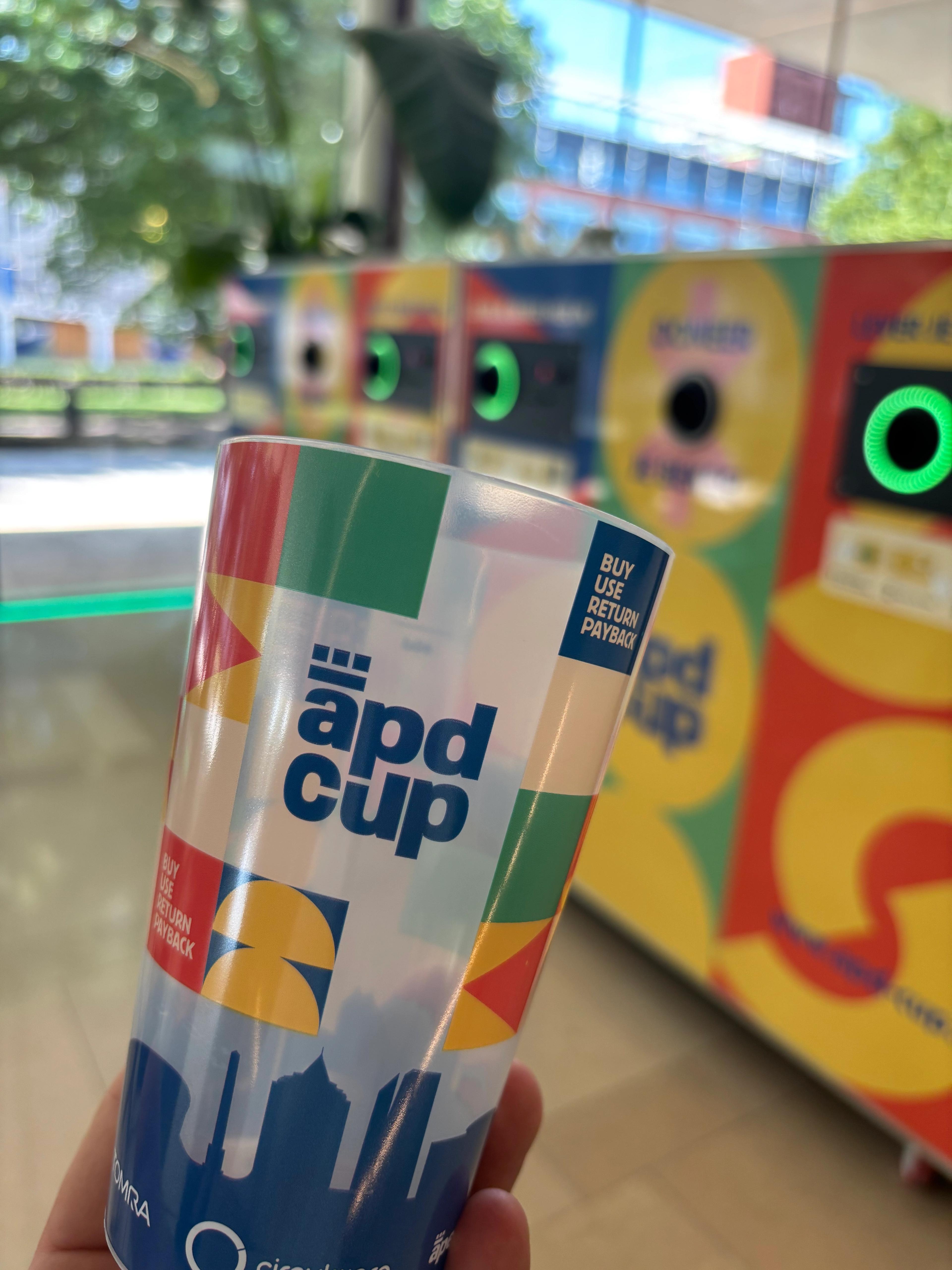
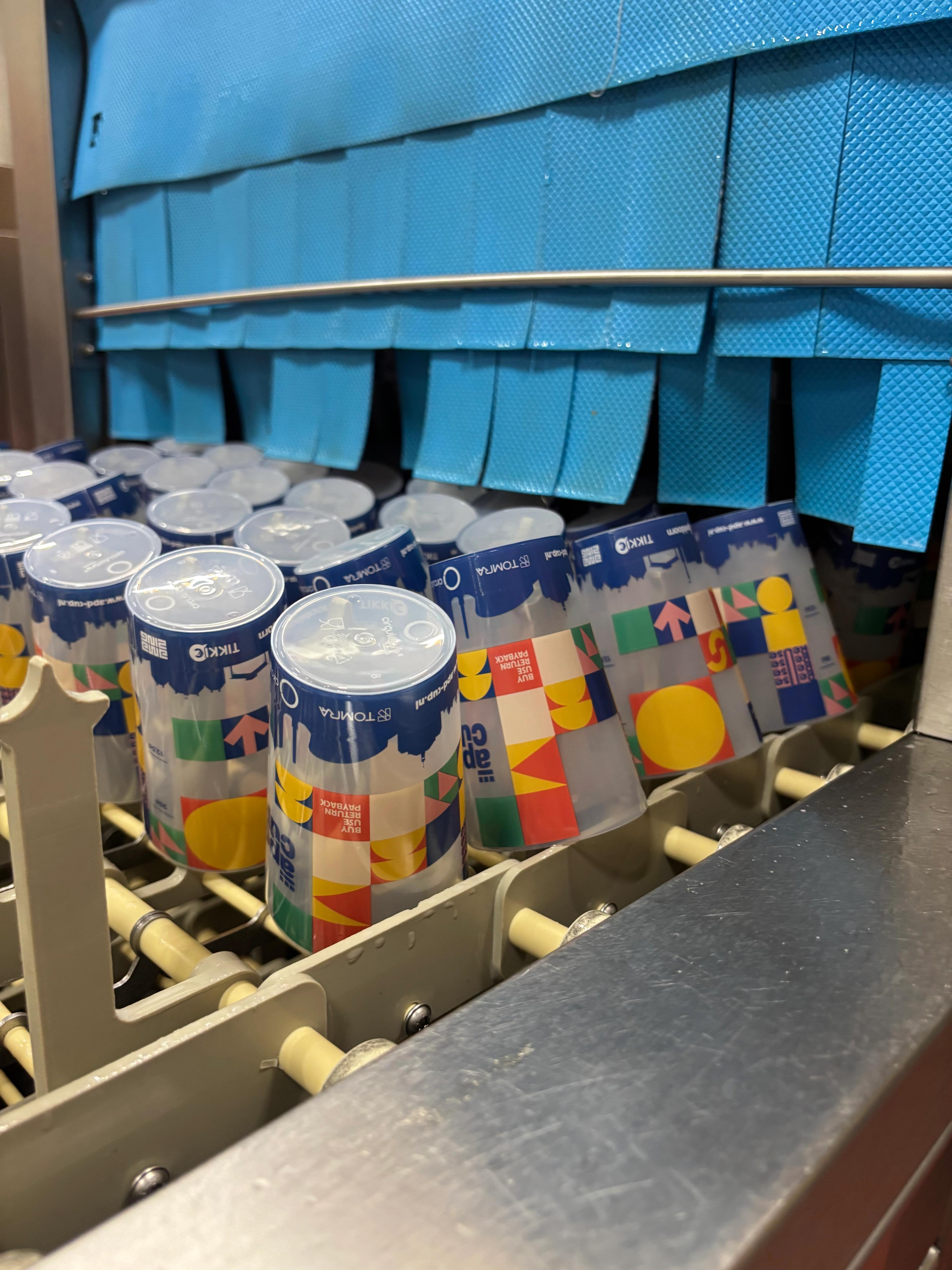
From Successful Pilots to the Ernem Hertcups
Following the initial successful trials at Musis, the cup return system was tested at various locations and events in Arnhem. During Park Open, the impact was immediately apparent: after the event, there were virtually no plastic cups left in the park, and the amount of litter had been significantly reduced. The system also worked well during the European Speedcubing Championship, which drew participants and visitors from all over the world. Despite the diverse nationalities, everyone quickly understood how the cup return process worked. At the sold-out Europe concert last October at Musis, it became clear that the system is becoming increasingly accepted by both visitors and staff.
The pilot is now continuing under the name Ernemse Hertcups. Local organizations are also contributing, such as the Groene Rijders, who are helping to organize the logistics surrounding the cups in a sustainable way. The next step is to expand the program to larger events and establish a permanent indoor location in Arnhem. This brings the city ever closer to a widely supported, circular cup system.
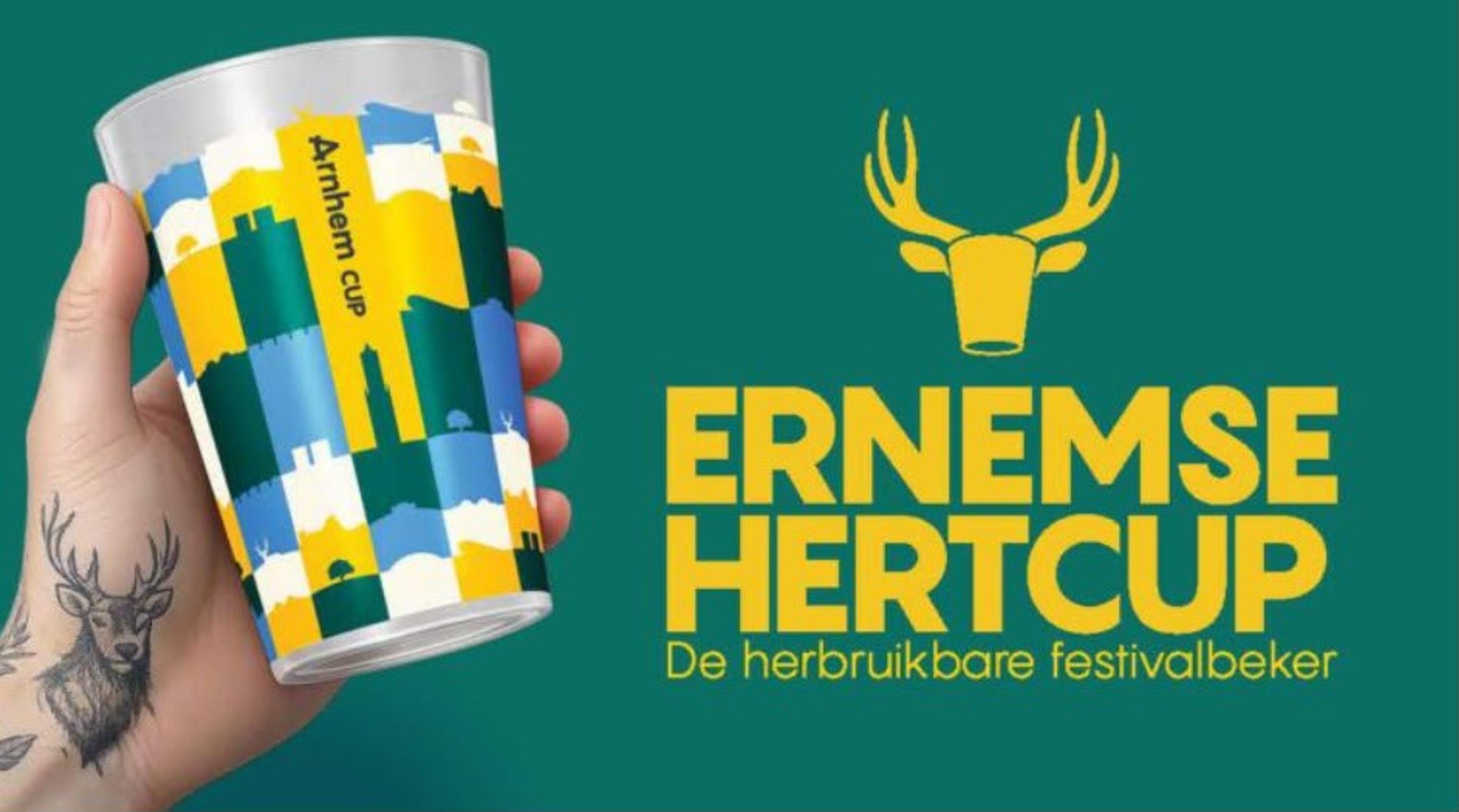
Want to learn more? Visit the Bekersysteem Arnhem website for information about the Ernemse Hertcups.
- The impact of mobility
- Sustainable energy consumption
- Sustainable use of materials and water
- Sustainability in the cultural sector: examples & best practices
- Nature and the cultural sector: how green can it get?
- Develop strategy on sustainability
- From diesel to sustainable power: How Arnhem is making King's Day more sustainable