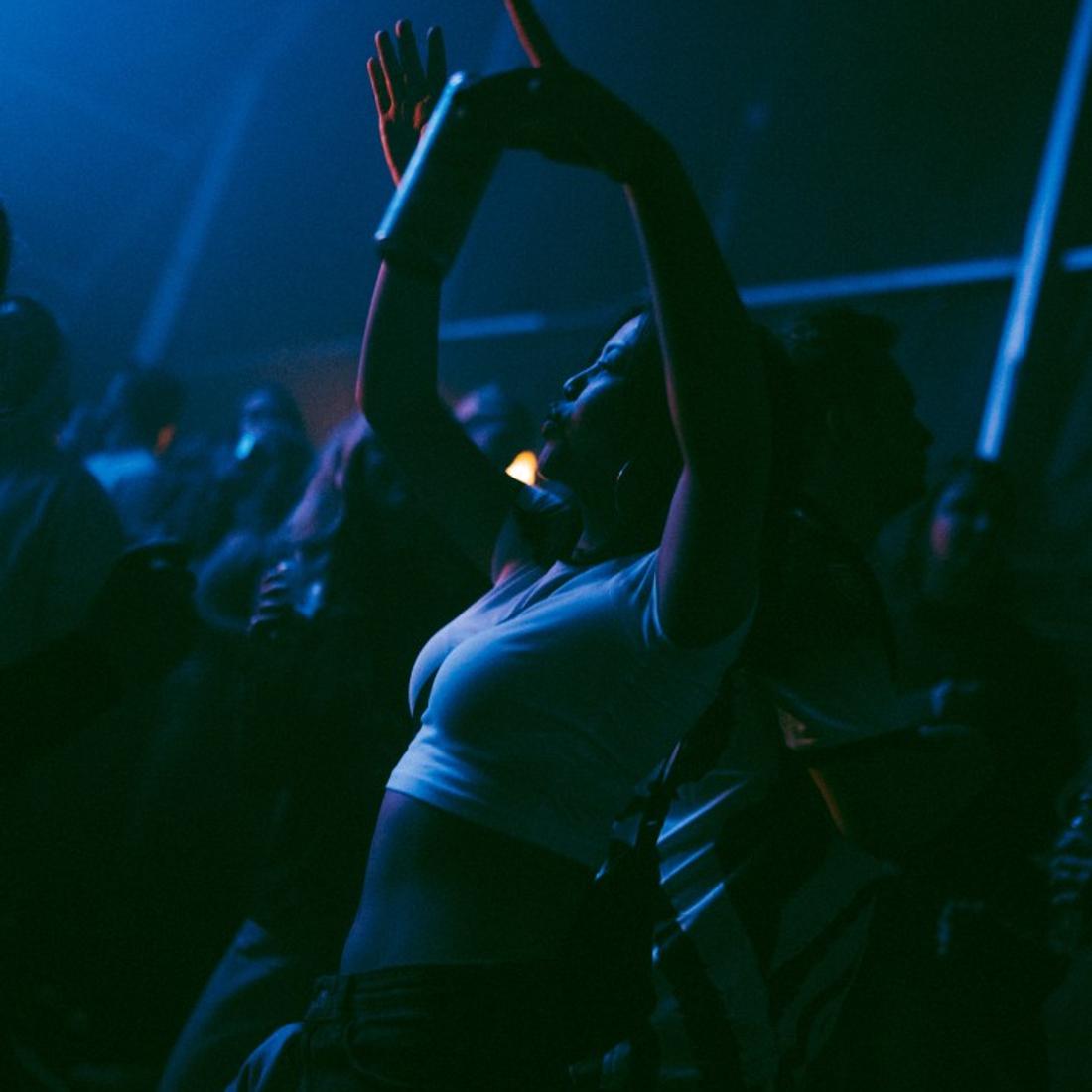
The night belongs to everyone: here’s how to foster an inclusive nightlife culture
Nightlife can bring together people who might not otherwise cross paths during the day. But who actually feels welcome out there at night? And who is given the opportunity to participate and have a say? Together with DJ, entrepreneur, and trainer Suus te Braak and Rabia Sheikh, co-founder of Amalgamation and active with the Nijmegen Night Mayor Foundation, we’ll explore what it takes to make diversity and inclusion not only visible but also tangible.
The Night as a Place of Encounter
Suus te Braak is a DJ, organizer, and entrepreneur who has been active in Nijmegen’s cultural scene for over twenty years. Through HizzFit, he works with the trans and queer communities and leads workshops on diversity and inclusion. Rabia Sheikh is the co-founder of Amalgamation, a platform for regenerative nightlife, and a member of the Nijmegen Night Mayor Foundation.
Both see the nightlife as a place where people can connect. “What I love about the places and the people I meet is that there’s always a sense of camaraderie,” says Suus. At the same time, Rabia notes that Nijmegen’s diversity isn’t yet visible everywhere: “Sometimes you think Nijmegen isn’t diverse, but it actually is.” According to her, different communities often still exist side by side. The challenge, therefore, is not only to reach different people but also to create spaces where they can actually meet one another.
Inclusion starts right at the door...
An inclusive event starts right at the door. A friendly welcome, clear house rules and amenities, explicit guidelines on expected behavior, and a recognizable point of contact can make a big difference. “Everyone who walks in wants to be acknowledged and greeted with a smile,” says Suus. That’s why Amalgamation works with a trained awareness team. Rabia: “That way, if something happens, we can act quickly.”
Movisie also emphasizes the importance of trained staff and collaboration in preventing and addressing inappropriate behavior in the nightlife sector. The Diversity & Inclusion Code provides additional guidance on this topic for the cultural sector.
...and it doesn't stop there
Moreover, safety doesn’t end at the exit of a club or festival. “You’re safe during an event like that, but once you’re outside the event, you’re alone and vulnerable,” says Suus. That’s why queer communities have long had ways of looking out for one another—for example, by going to a party together and heading home together. According to Suus, that mutual care is an important part of social safety.
For organizers, it is therefore important to consider the entire visitor experience—not just what happens inside the venue, but also the information provided beforehand, as well as arrival and departure. While you can’t prevent every unsafe situation, you can identify where barriers arise and consider how to help visitors participate safely.
💡 Tip: Try experiencing your event from a visitor’s perspective. From the information provided beforehand and upon arrival to the door policy, the amenities, and the trip home. Where might barriers arise, and which ones can you reduce?
A diverse lineup does not necessarily mean an inclusive organization
Diversity is often most visible in a program—for example, in the creators whose work you feature or the people you showcase in your communications. While this can be valuable, it doesn’t necessarily reflect how inclusive the organization itself is. The Diversity & Inclusion Code therefore focuses on four interrelated “P’s”: Program, Audience, Staff, and Partners. Structural inclusion, then, is also about who works behind the scenes, who you collaborate with, and who influences decisions. Furthermore, the evaluation of five years of the D&I Code shows that sustainable change requires time, ownership, and sustained attention.
Suus and Rabia also emphasize that inclusion goes beyond a one-time program or a theme month. “The most important thing is to bring people along. Don’t decide for people—work from the bottom up,” says Rabia. That also means not just asking communities for input, but giving them the space to actually exert influence. “It’s not about collecting ideas; it’s about co-creation.” Suus agrees: don’t just look at who you’re programming for, but also at who can contribute ideas, make decisions, and gain access to the resources needed to build something on their own.
Not just the stage, but also the resources
Working in a more inclusive way takes time, resources, and often money as well. This can be particularly challenging in the nightlife scene, because many smaller initiatives rely on volunteers or organizers who do this work alongside another job. According to Rabia, it’s therefore important to also look at how existing resources are distributed and made accessible.“Give it back to the people and don’t let just one or two organizations call all the shots. People need to be able to organize for themselves.”
It doesn’t have to be just about grant money. For example, organizations can make space or equipment available, share expertise on production and fundraising, leverage their communication reach, or provide access to their professional network. Suus recognizes this from her own experience with communities: “If I can’t figure something out on my own, I ask for help within the community. We share the resources, experience, and knowledge we have.”
Ultimately, an inclusive nightlife culture isn’t just about who’s on stage or in the audience, but also about who feels welcome and safe, who has a voice, and who has access to space and resources. The night, in particular, can be a special place for people to come together. “You understand each other better when you meet at night,” Rabia concludes.
💡 Tip: Take a closer look at a single event or program. Examine the entire visitor journey, identify who shapes the program, determine which communities you haven’t reached as much yet, and figure out what space, knowledge, or resources you can share. This way, inclusion becomes something you continue to work on, step by step.
Read more