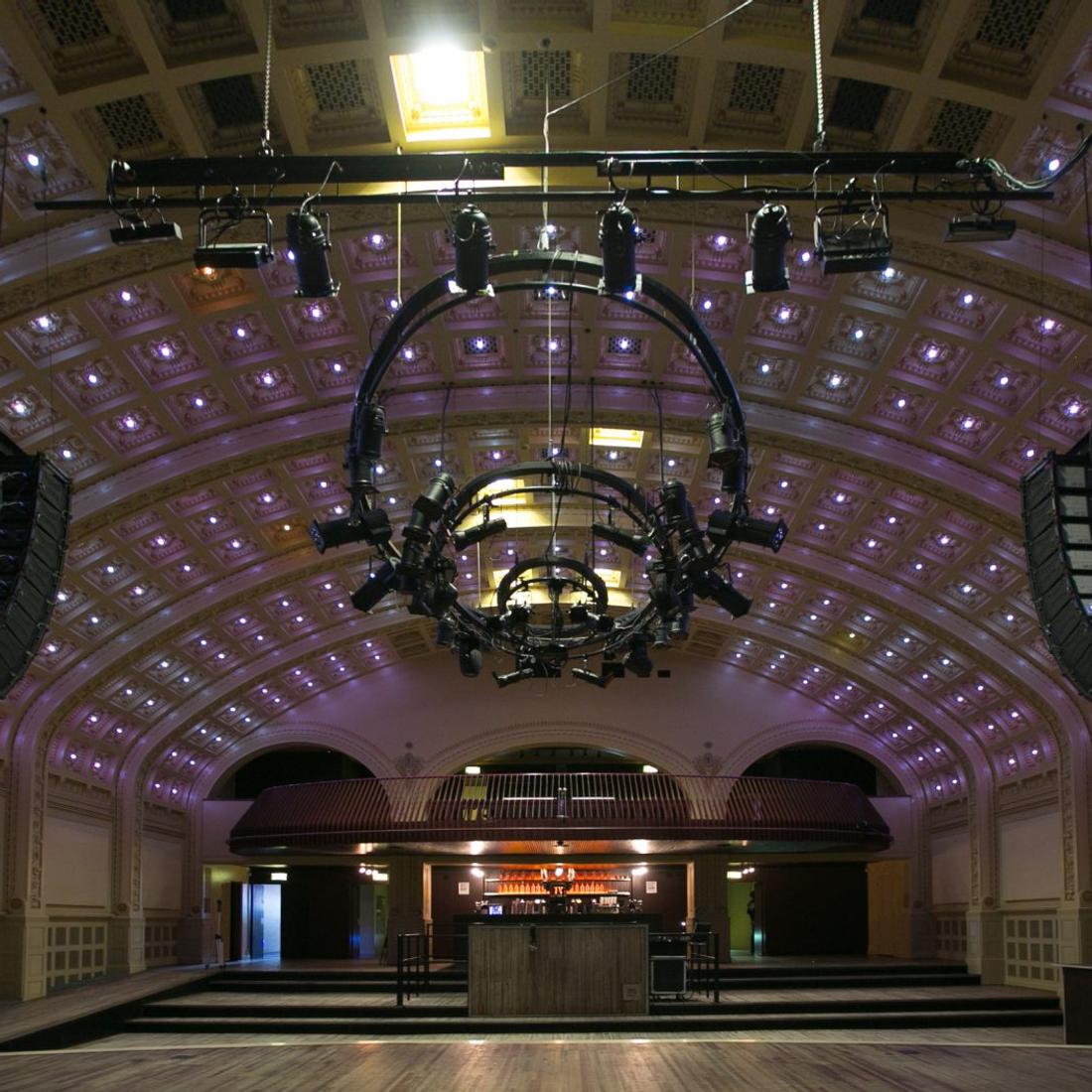
Choosing the right location
Many initiatives or projects involve choosing a location. This may be because you want to give a performance, organize an event, launch a book, exhibit your artwork, etcetera. On this page we will help you make the right choice.
A theater, an empty factory building, a park, or a café could all be the right venue for your project. Which location works best depends on what you want to organize and who you want to reach. So look beyond just the atmosphere and ambiance. Accessibility, technical capabilities, safety, permits, and costs ultimately determine whether a location is truly suitable.
Start with your program and audience
First, think about what needs to happen at the venue. How many visitors do you expect? Do you need a stage, exhibition walls, electricity, water, food and beverage services, or changing rooms? And what kind of atmosphere do you want to create?
Be sure to involve your audience in that decision as well. A venue may be a perfect fit in terms of content, but it may be less suitable if visitors have difficulty getting there or cannot enter on their own. Therefore, consider physical accessibility, accessibility by public transportation and bicycle, parking options, and the route from arrival to the entrance right from the start.

What is allowed and permitted at the venue?
Not every location is suitable for every initiative. Therefore, before making any arrangements, check how many people are allowed to attend, what facilities are available, and what rules apply regarding, for example, noise, hours of operation, food and beverage service, and temporary structures.
This is especially important in public spaces. Arnhem and Nijmegen have several designated event venues that are subject to specific conditions. These include maximum visitor capacity, available power sources, noise regulations, and traffic and safety requirements. Even if you’re organizing an event inside a building, you may need to file a notice or obtain an event permit. Therefore, always check with the municipality.
💡 Tip: Do you have a venue in mind? Check the municipal requirements before you finalize your booking. This will help you avoid having to make changes to your plan later on.
Consider accessibility
Accessibility goes beyond a barrier-free entrance. Can visitors make their own way from the parking lot or bus stop to the venue? Are the walkways wide and free of obstacles? Is there an accessible restroom? And can visitors with disabilities actually enjoy the program?
Cultuur Academy Together with cultural entrepreneurs, experts by experience, the APCG, and the City of Arnhem, it has developed a checklist that allows you to incorporate accessibility considerations as early as the planning stage.

List all costs and agreements
The rental price usually tells only part of the story. So be sure to ask what’s included in the venue rental. Think about technical equipment, staff, cleaning, security, coat check, utilities, and catering. Also, make clear agreements about responsibilities. Who handles ticket sales? Who receives the catering revenue? Who is responsible for damage, permits, or security? And what happens if the event can’t take place? Put important agreements in writing.
Always go and check it out for yourself
Visit a venue before making a final decision. Online photos and floor plans don’t tell the whole story. During your visit, walk the route taken by visitors, performers, and vendors. Check out the entrance, the audience area, backstage, restrooms, emergency exits, and loading and unloading areas. Also, check where power, water, and internet are available, and ask for a technical floor plan if one exists. Take photos and note down any dimensions that are important for your setup.
Create a simple floor plan
You don’t need to have a detailed production plan just yet, but do create a rough layout before making your final decision. Where will the stage, audience, food and beverage area, technical equipment, and any booths be located? How will visitors move through the space, and will emergency exits remain clear? A simple floor plan often quickly reveals whether a venue that looks good on paper actually works in practice.
💡 Tip: If you're unsure, compare two or three venues based on the same criteria: atmosphere, capacity, accessibility, technical facilities, ease of access, rules, and total cost. That makes choosing a lot easier.