Reusable tableware during the Four Day Festivities
From plastic to practical: how the Four Days Marches Festival is working towards a circular future.
A festival snack on a real plate instead of disposable plastic or cardboard - it sounds like a small change, but the effect is big. During the 2025 Vierdaagsefeesten, the first test of reusable tableware was conducted at De Kaaij Hoog. The trial is part of the organization's ambition to be fully circular by 2050. The results? A high return rate, a lot of enthusiasm and valuable lessons for other organizers.
The move to reusable tableware
In 2022, the Vierdaagsefeesten Foundation took the first step with recyclable cups: the largest waste stream from the event. Now it is the turn of the tableware. "European regulations for single-use tableware will undoubtedly be introduced at some point," says sustainability coordinator Thomas Janssen. "It is already mandatory in Belgium. As the largest event in the Netherlands, we want to be a pioneer in this area. Waiting until the law is in place would actually make it more difficult."
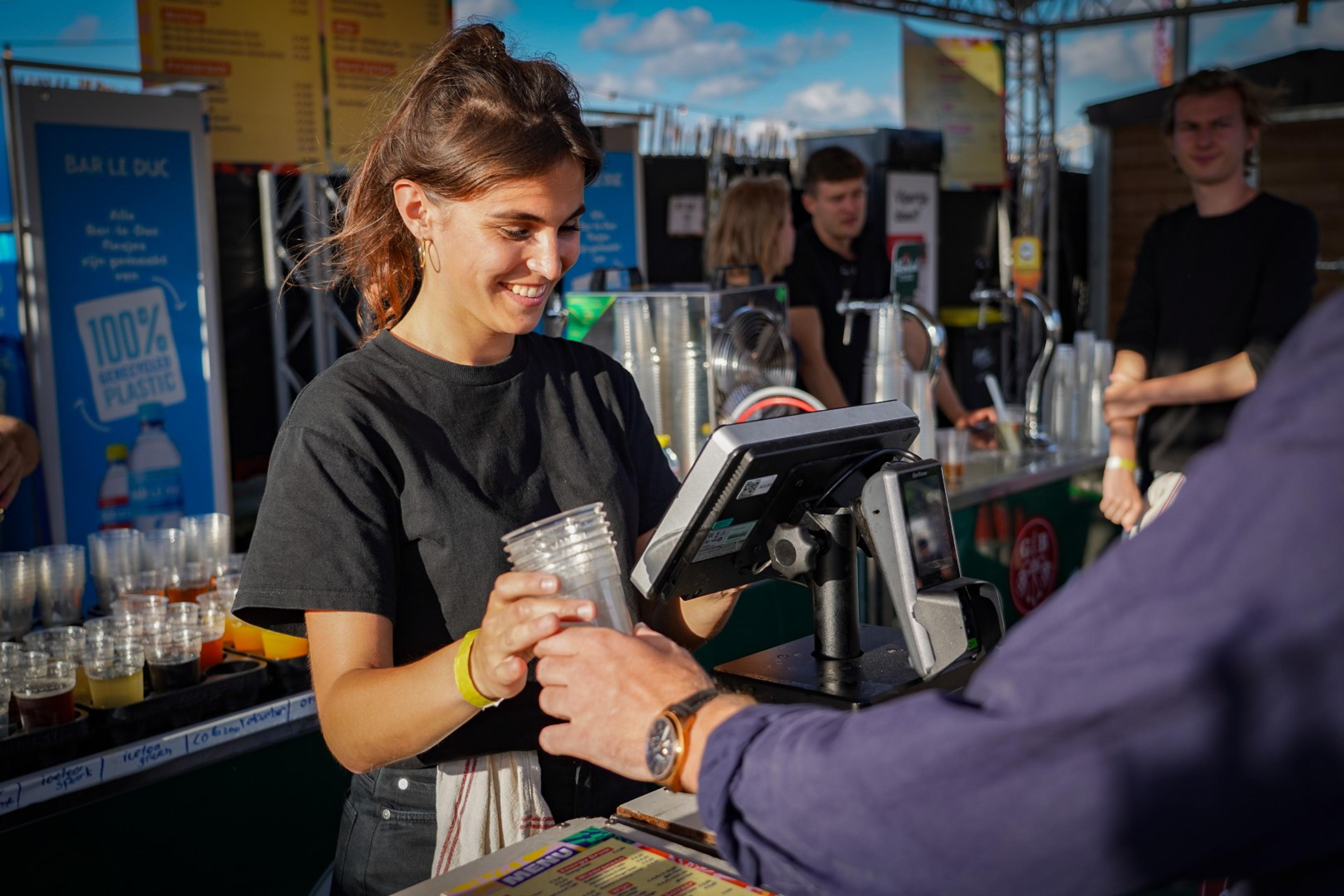
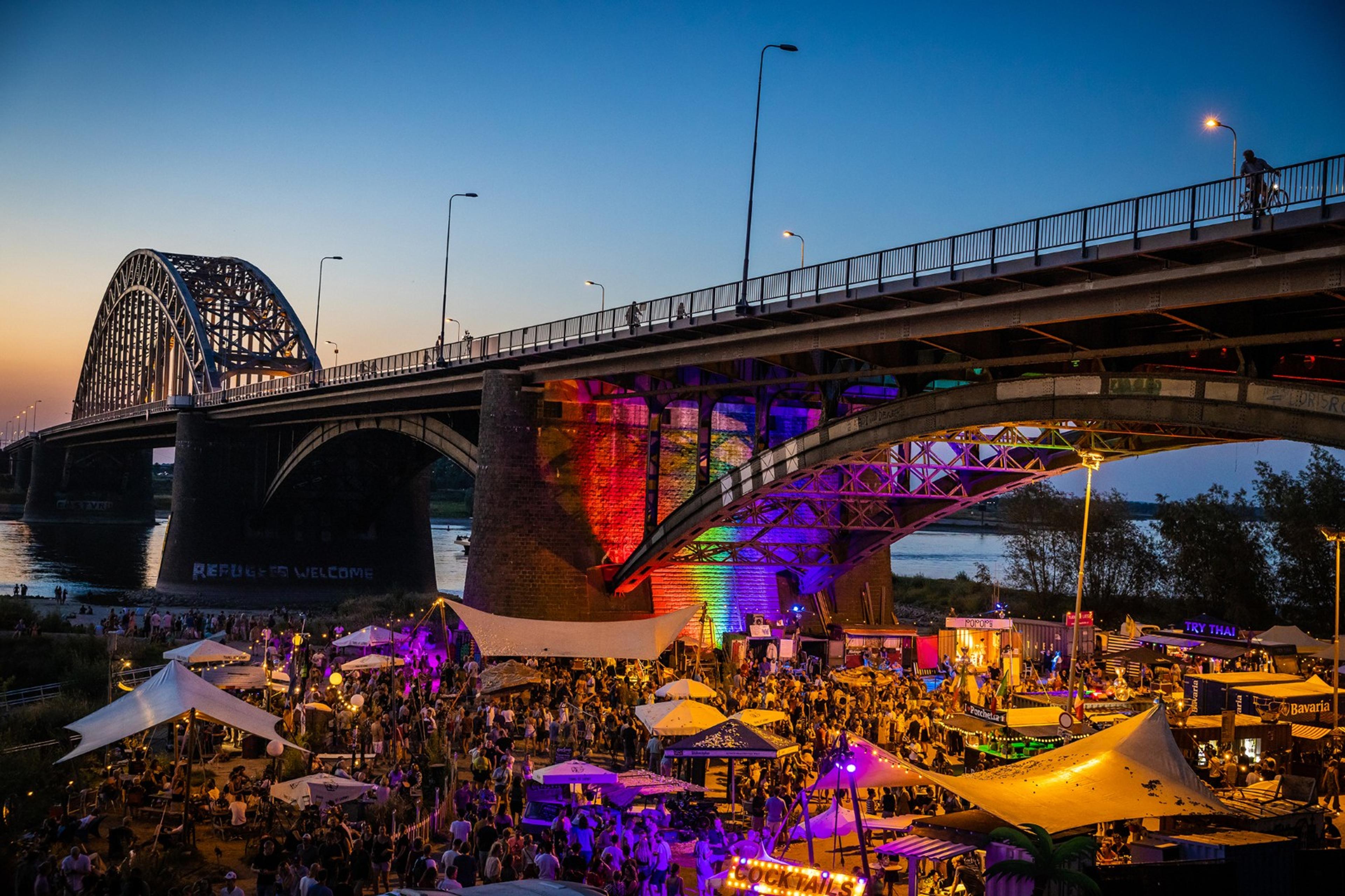
In addition to the legal perspective, social responsibility also played a role. The Vierdaagsefeesten attract between 1 and 1.5 million visitors annually, including 300,000 unique visitors, which means a lot of food, a lot of drink, and therefore a lot of waste. By experimenting with reusable solutions now, the organization is preparing for a circular future.
Collaboration with entrepreneurs
Three food trucks on De Kaaij Hoog participated in the pilot. Not everyone was immediately enthusiastic. "Some people mainly saw practical objections or additional costs," says Thomas. "Nevertheless, enough entrepreneurs believed in the idea to make the experiment possible."
Cooperation was an important part of the approach. The organization involved the food trucks in the implementation from the start: how many dishes they sell, what type of tableware is needed, and how the logistics are organized. This provided valuable insights for future editions.
This is how the system worked
Visitors paid a €2.50 deposit for their plate or tray, which they got back when they returned it via a QR code. When scanning the QR code, visitors could enter their details and the amount was refunded.
To ensure that the process ran smoothly, clear collection points were set up and volunteers were on hand to help visitors or collect the tableware. It worked: no less than 92% of the tableware was returned. "We are really proud of that," says Thomas. "It shows that visitors are willing to cooperate if you make it easy for them and offer a small financial incentive."
Learning from practice
The test not only yielded an impressive return rate, but also identified a number of areas for improvement. For example, the system with QR code and IBAN entry proved cumbersome and caused frustration among some visitors. Communication on site was also not always clear enough.
Key lessons:
- Make refunds simpler. Cash refunds or refunds via debit card are more user-friendly than a QR system.
- Ensure clear communication. Recognizable menu boards and clear instructions at all food trucks.
- Avoid confusion with other systems. Use the same structure as for reusable cups.
- Keep it accessible. Fewer steps = greater understanding and engagement.
Despite these teething problems, the overall response was positive. Visitors enjoyed eating on real tableware and appreciated its sustainable nature. "Most people don't do it for a nicer plate, but because they care about sustainability," says Thomas.

Outlook and advice
The pilot left us wanting more. "We want to do this again in 2026, with improved logistics and communication," says Thomas. The goal is to scale up the system to more locations within the festival in the coming years and—if technically feasible—work toward full implementation by 2028.
His advice to other organizers:
- Collaborate with all parties involved: municipality, entrepreneurs, and suppliers.
- Know your data: how many dishes are sold and what type of tableware do you need?
- Invest in a good return system. Current cup systems are not necessarily suitable for tableware; look for automation and convenience.
- Start small, test, and share your experiences. By learning together about what works and what doesn't, the entire sector can become more sustainable more quickly.