Experience with Stroomversneller: Robin Speijer - As If Your Eyes Were Fingers
With the Stroomversneller, artist Robin Speijer sought to deepen her practice in several areas: she researched the role of scale, grew her own indigo to make pigment, and explored possible ways to present her work. Not everything went as planned, but that made the whole experience all the more educational.
Capturing Shine in Paint
Ever since graduating, Robin has been exploring the qualities of fabrics through her paintings and how those qualities can be captured in paint—as a kind of tactile experience for the eyes. With this project, she created her own fabric archive, a step that immediately accelerated her creative process.
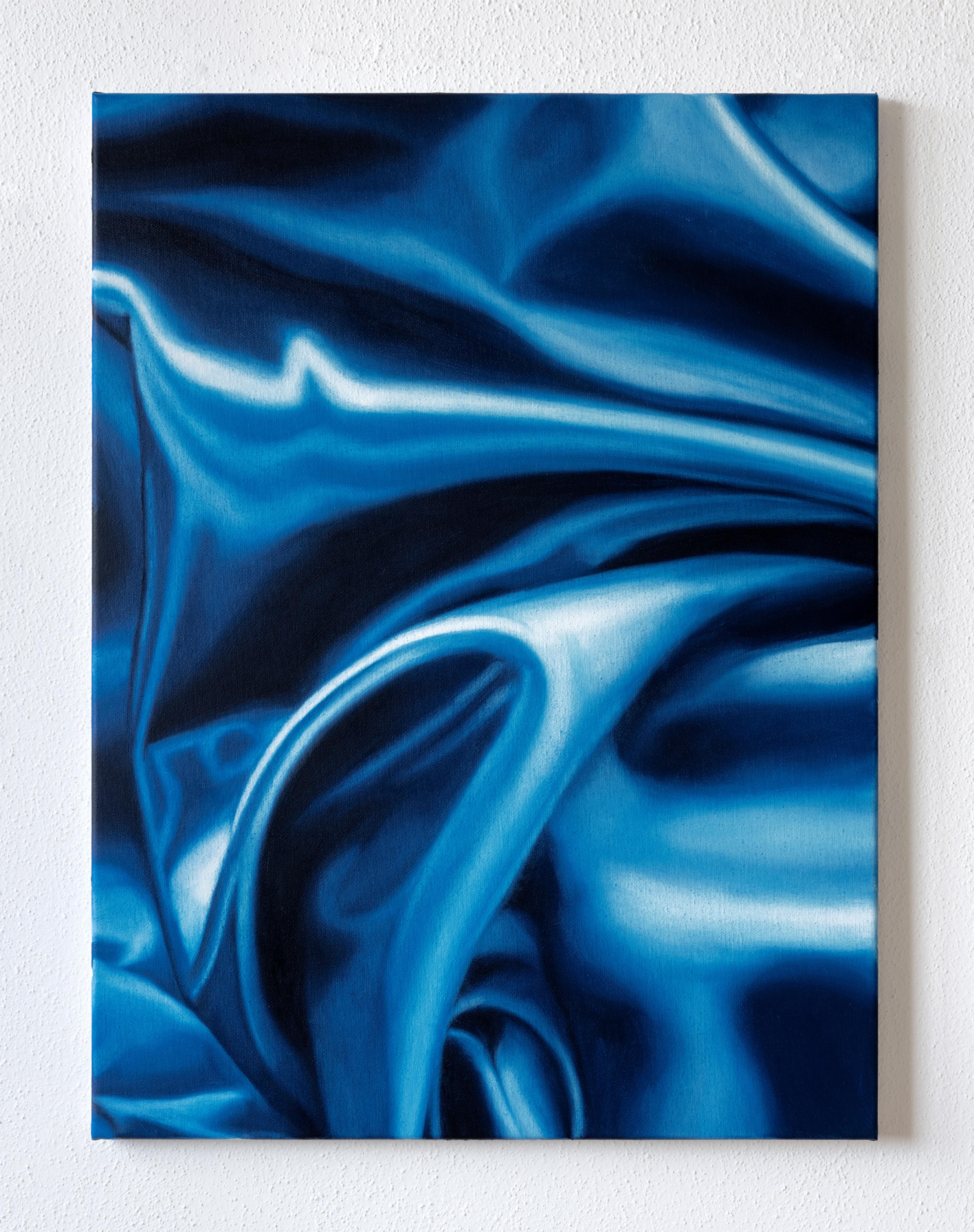
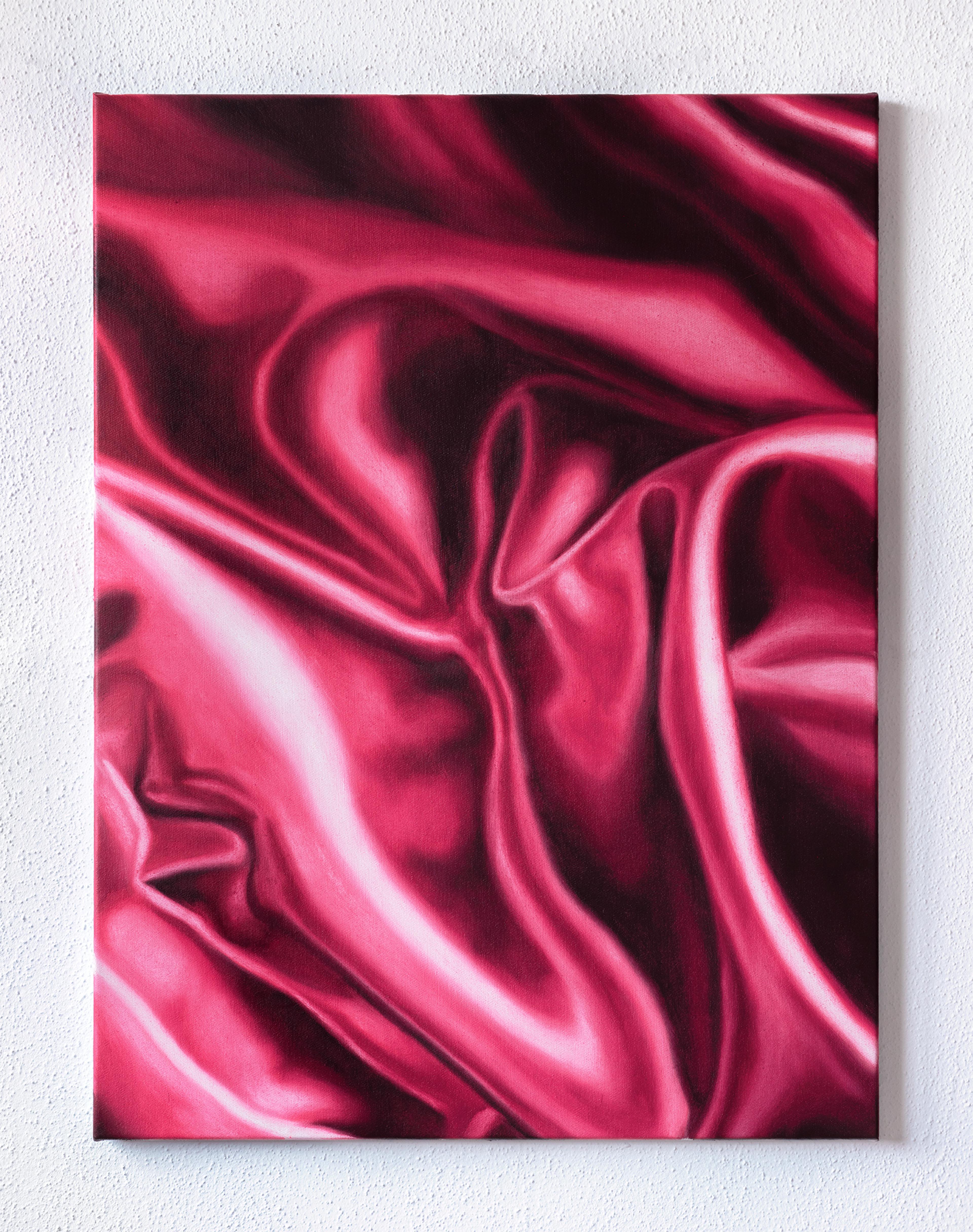
She wanted to use shiny fabrics for a new series of paintings: “With strong lighting and high contrast, a soft fabric can suddenly mimic opposite textures. I wanted to give it the effect of molten metal that keeps changing shape.” For this, she chose two contrasting colors: blue and magenta. She then created fifteen small-format monochrome paintings, during which she discovered new techniques. For example, she began working with cotton swabs to precisely outline lines on the small surface: “The sheen really had to be a highlight; for that, I always use the white of the canvas.”
Big Plans
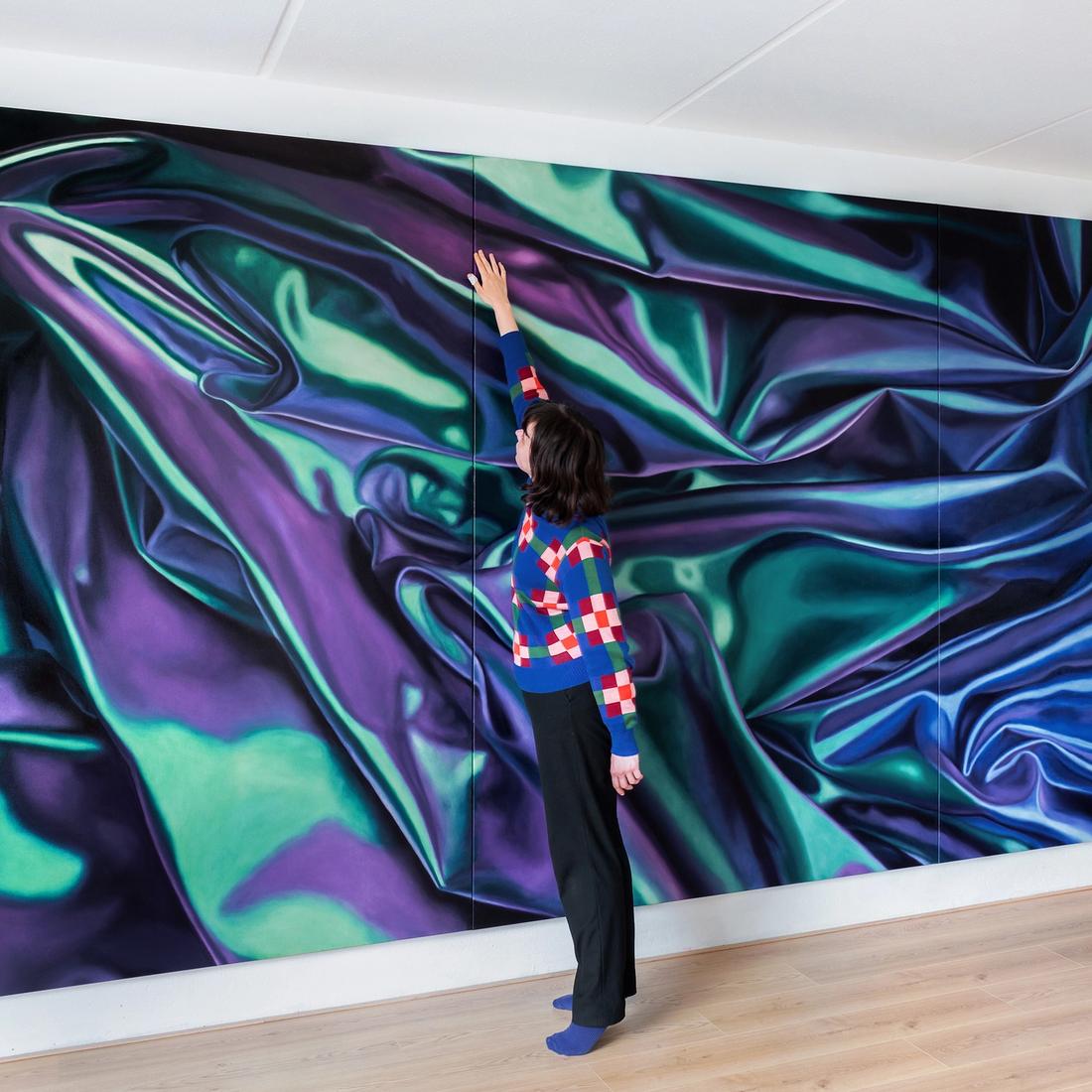
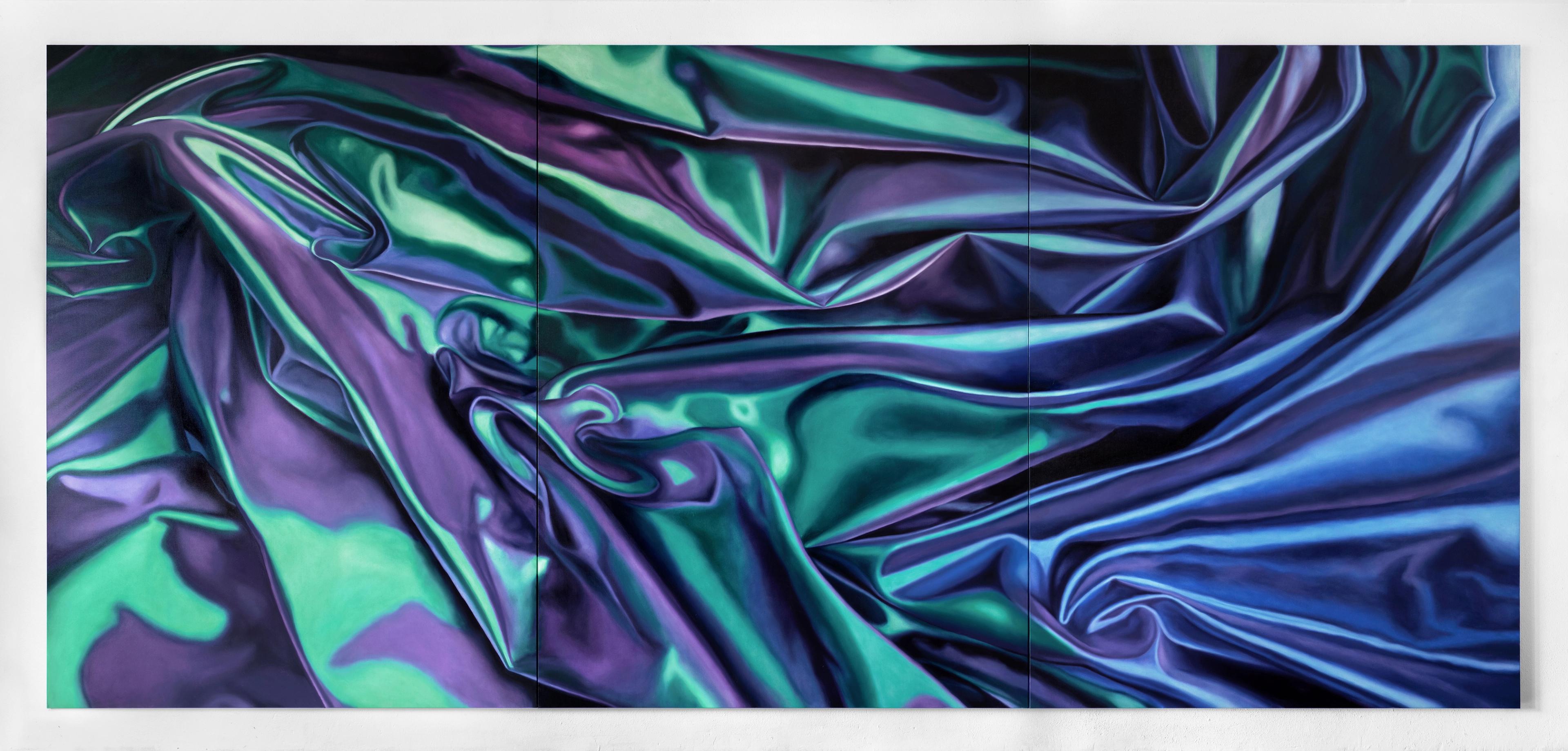
In addition to the small series, there had been something on her wish list for years: an extremely large painting. The result is a triptych measuring 510 by 230 centimeters. The work has the same metallic effect and is titled *Pica Pica*. “This is the Latin name for the magpie. Not only do magpies have shiny tail feathers themselves, but they’re also known for collecting shiny objects. As a painter, I share that same craving for shine.”
Because the work was literally larger than she was, she had to approach it very differently than usual: “You quickly lose the big picture; you have to step back even more often to see what each new brushstroke does.” This work was also multicolored rather than monochrome, which meant she not only had to mix large quantities of paint but also had to assess how those colors related to one another. “I didn’t have enough of some colors, while I had too much of others, or they weren’t quite the shade I needed. Constantly remixing the colors and looking closely was a great learning experience.”
Failed harvest
Not everything went smoothly. One of the three grants she applied for was not awarded, forcing Robin to adjust her budget. In addition, her own harvest of indigo plants failed: “Despite that, I did gain a better understanding of what goes into the production of indigo pigment.” This setback led her to a clear conclusion: growing indigo is a labor-intensive process that she’s better off leaving to the professionals. “If I keep trying something over and over and it keeps failing, it costs me my motivation, time, and money. That’s a shame.” She does, however, want to continue and further develop the process of turning the pigment into paint and other media herself.
Outside the studio
One of her goals was to find new venues to showcase her work. She succeeded in two ways. She was invited to participate in the group exhibition *Material Girl* at Enari Gallery, which explored materiality in painting. Four of the small works were shown there. “It’s always interesting to see how a work behaves in a space outside the studio. The exhibition also featured many works by artists with whom I feel a kinship, which gives me great satisfaction.”
In addition, the company Verenigd Beheer in Baarn asked if she would be willing to make work available for rental. Fourteen works, including a set of three of the small paintings, were rented out for nine months. “The work is being seen, I’m getting paid rent, and I’ll eventually get them back. Plus, I’m getting very enthusiastic feedback from the employees!”
What the contribution meant
On a personal level, the project gave Robin more confidence in herself and her artistic abilities: "Now I've seen that if I push myself, I can definitely paint something this big, even though I felt a lot of uncertainty about it beforehand."
" Stroomversneller contribution Stroomversneller me to work for a period of time with fewer financial worries and to invest in high-quality materials. As an artist, you're constantly working to motivate yourself and persevere—support from independent institutions is very important in this regard."
Robin has some practical advice for others who are considering applying: mark all application deadlines on your calendar well in advance: “Once the application period opens, it closes very quickly. You really need to have everything ready ahead of time.”
Want to stay up to date with all our offers?
Do you have questions about the funds or your application?
Fund Coordinator Maike Pijnappel is happy to assist you. Please contact her for personalized advice or to discuss your idea.
Maike Pijnappelmaike@cultuuracademy.nl